1980-1987: pioneering phase
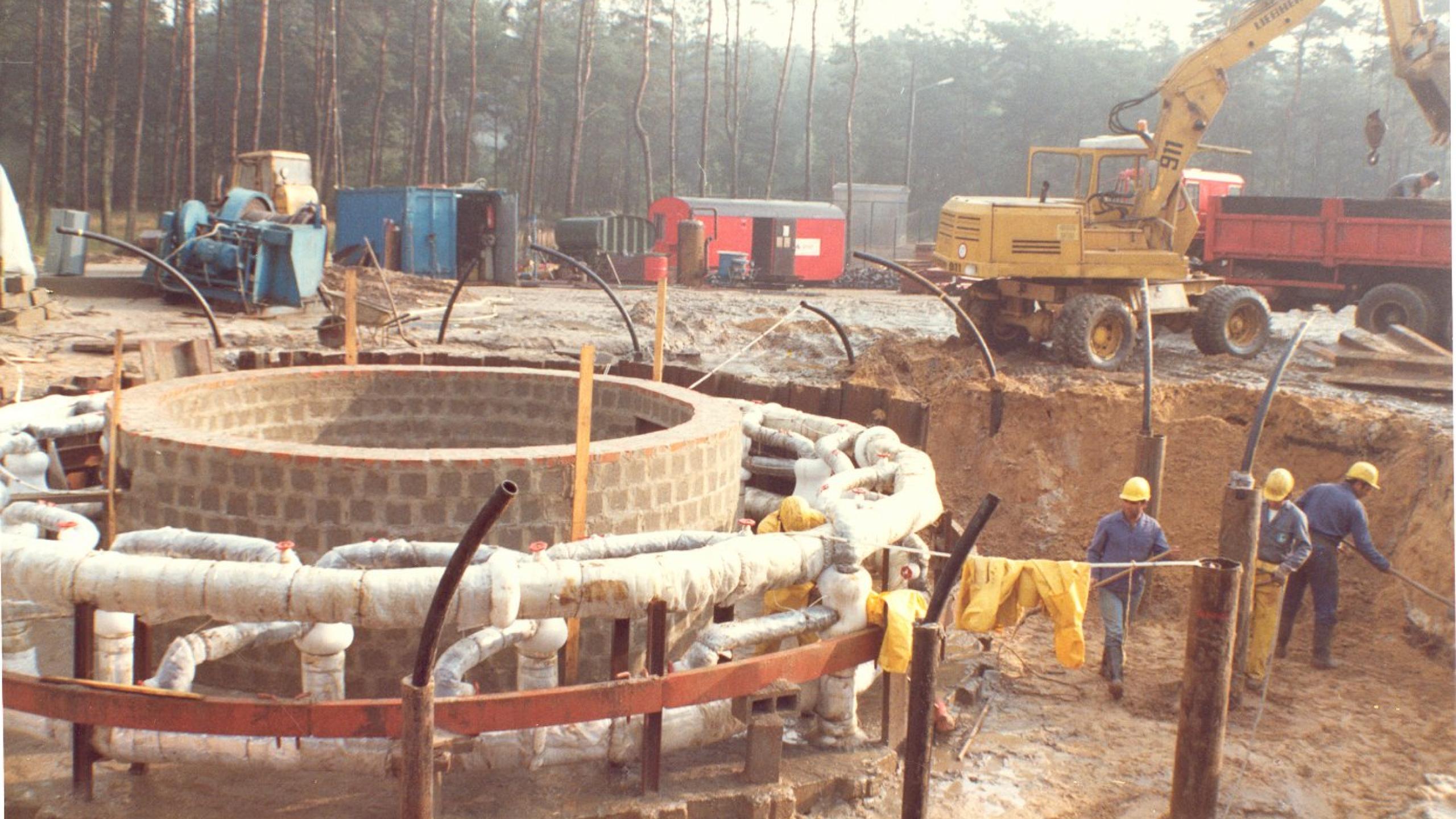
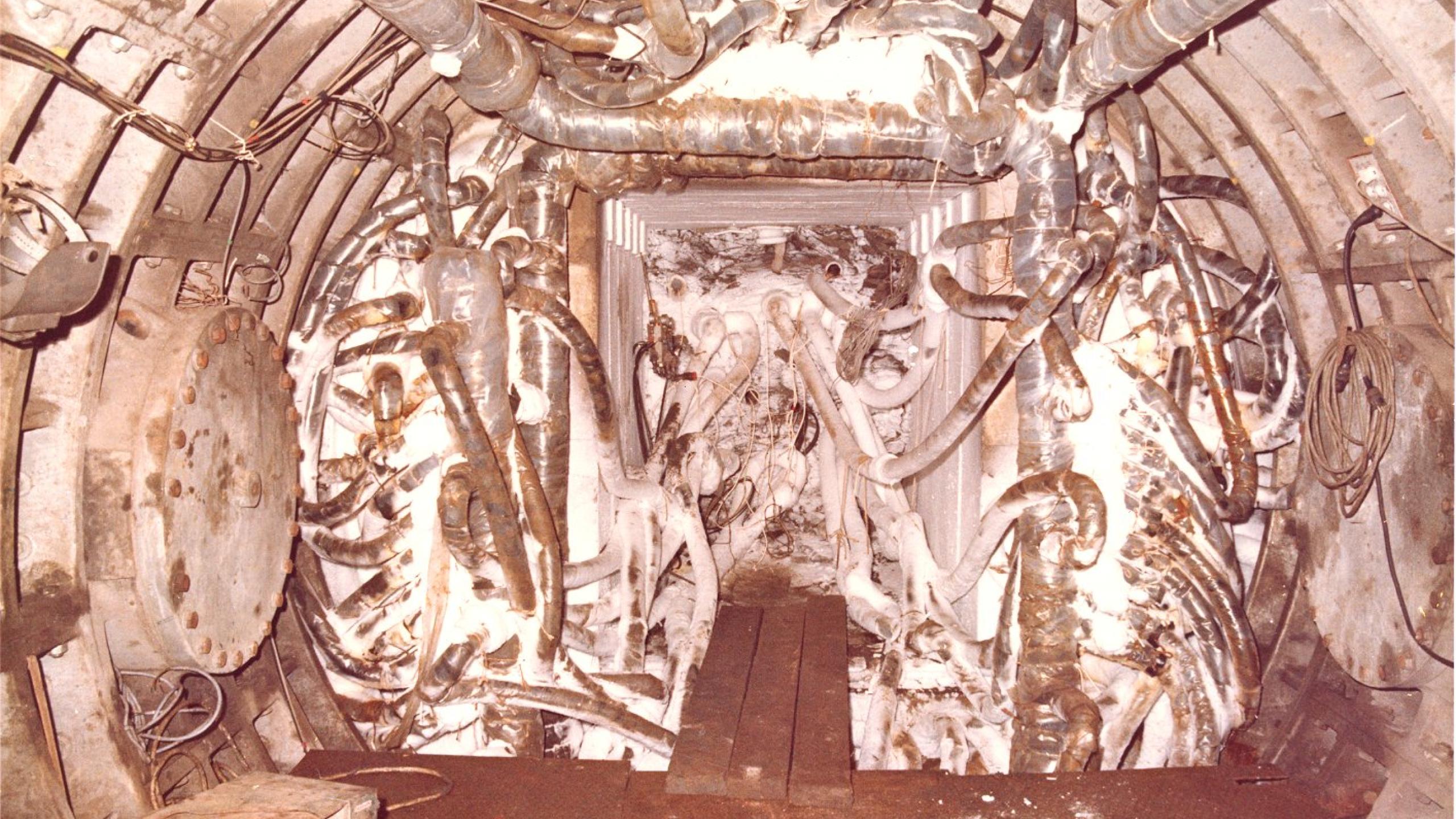
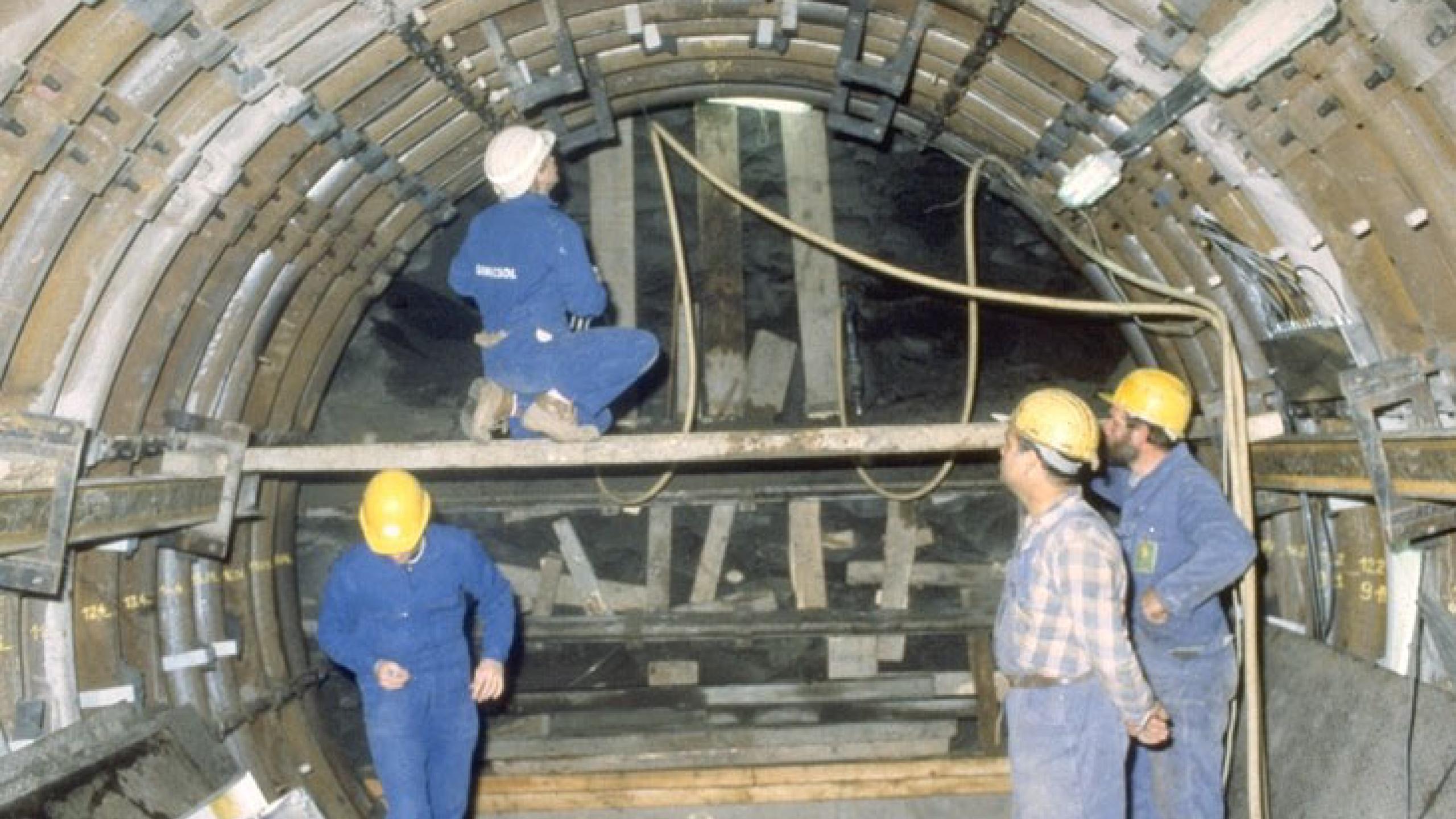
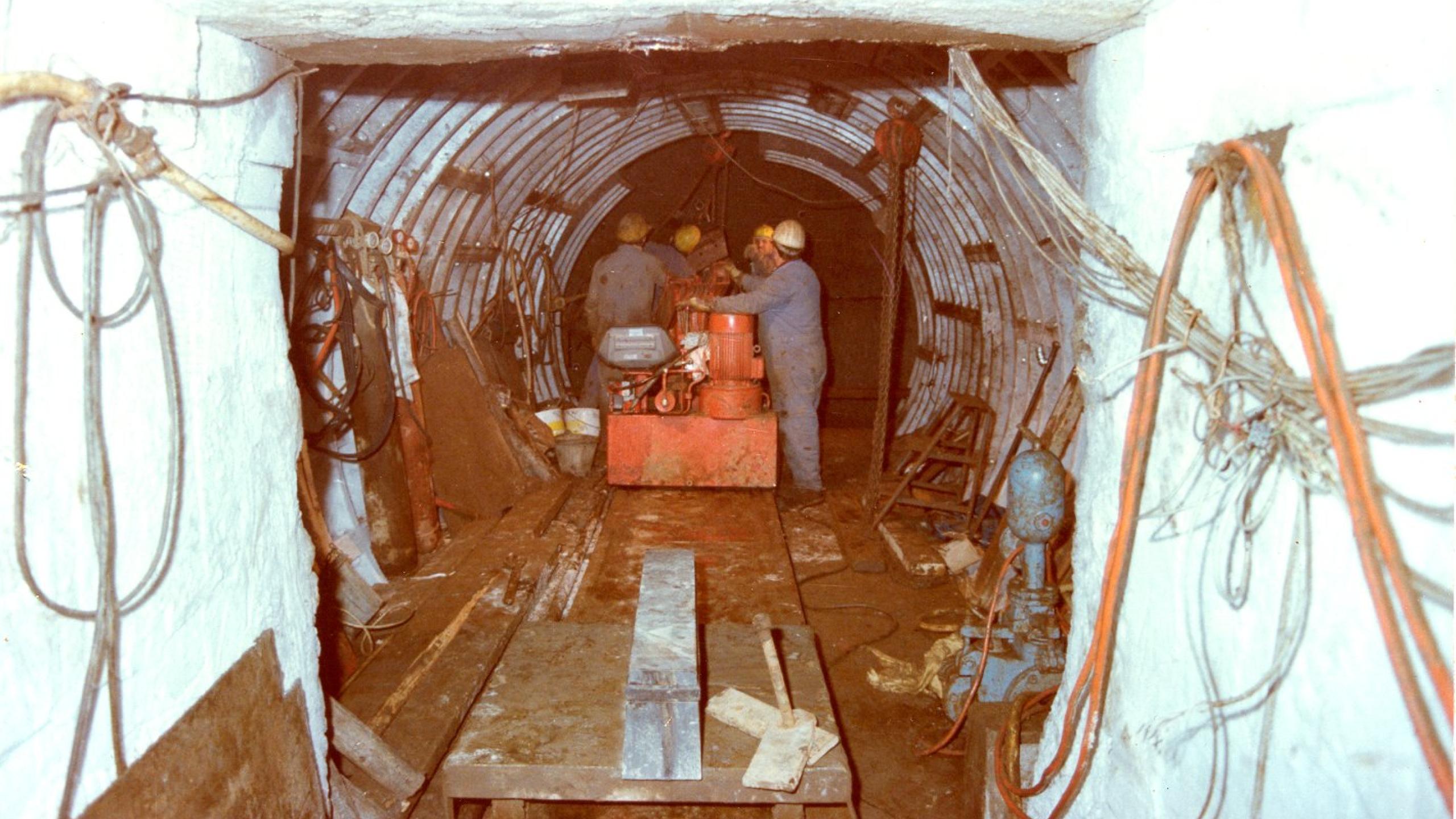
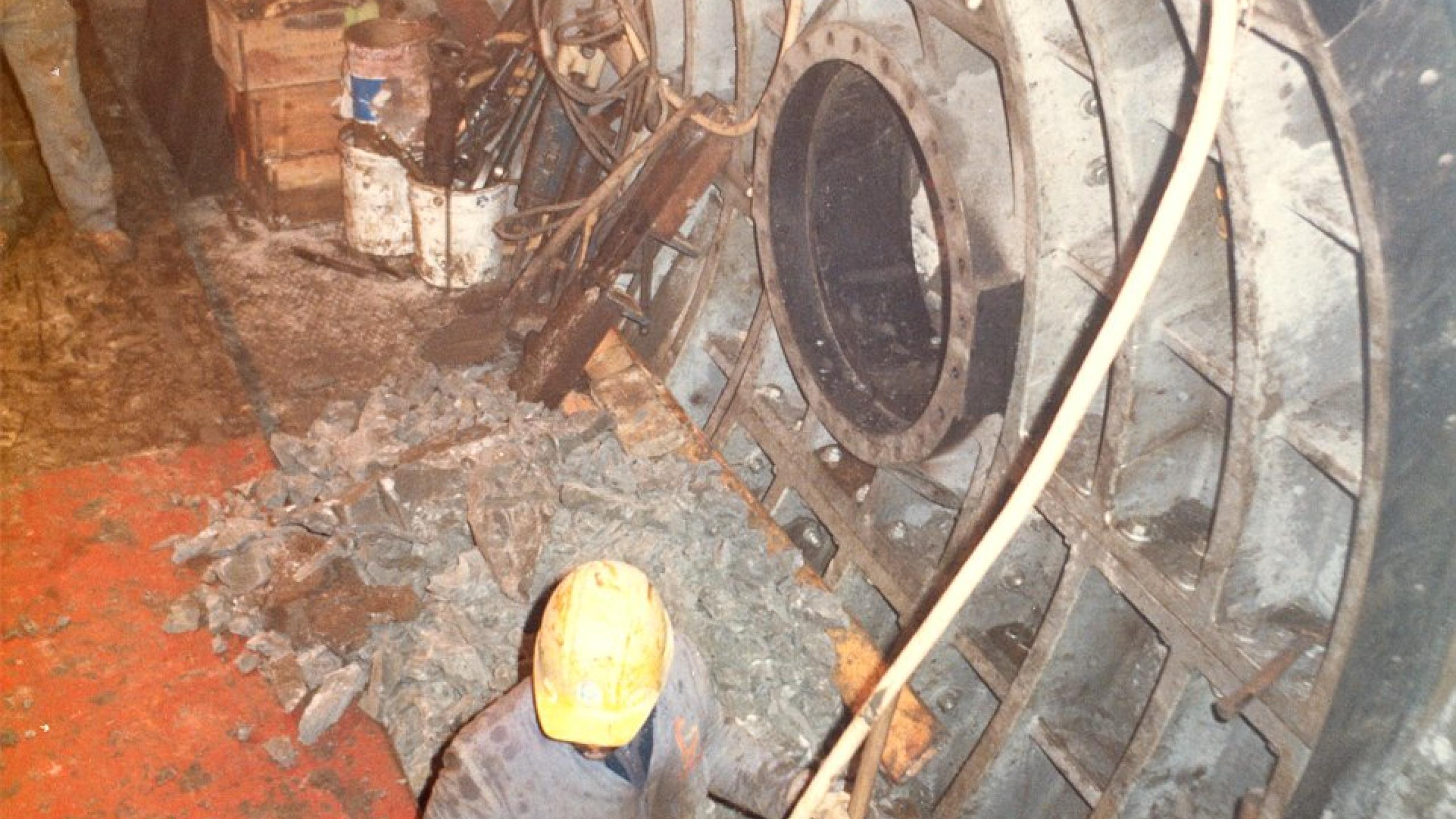
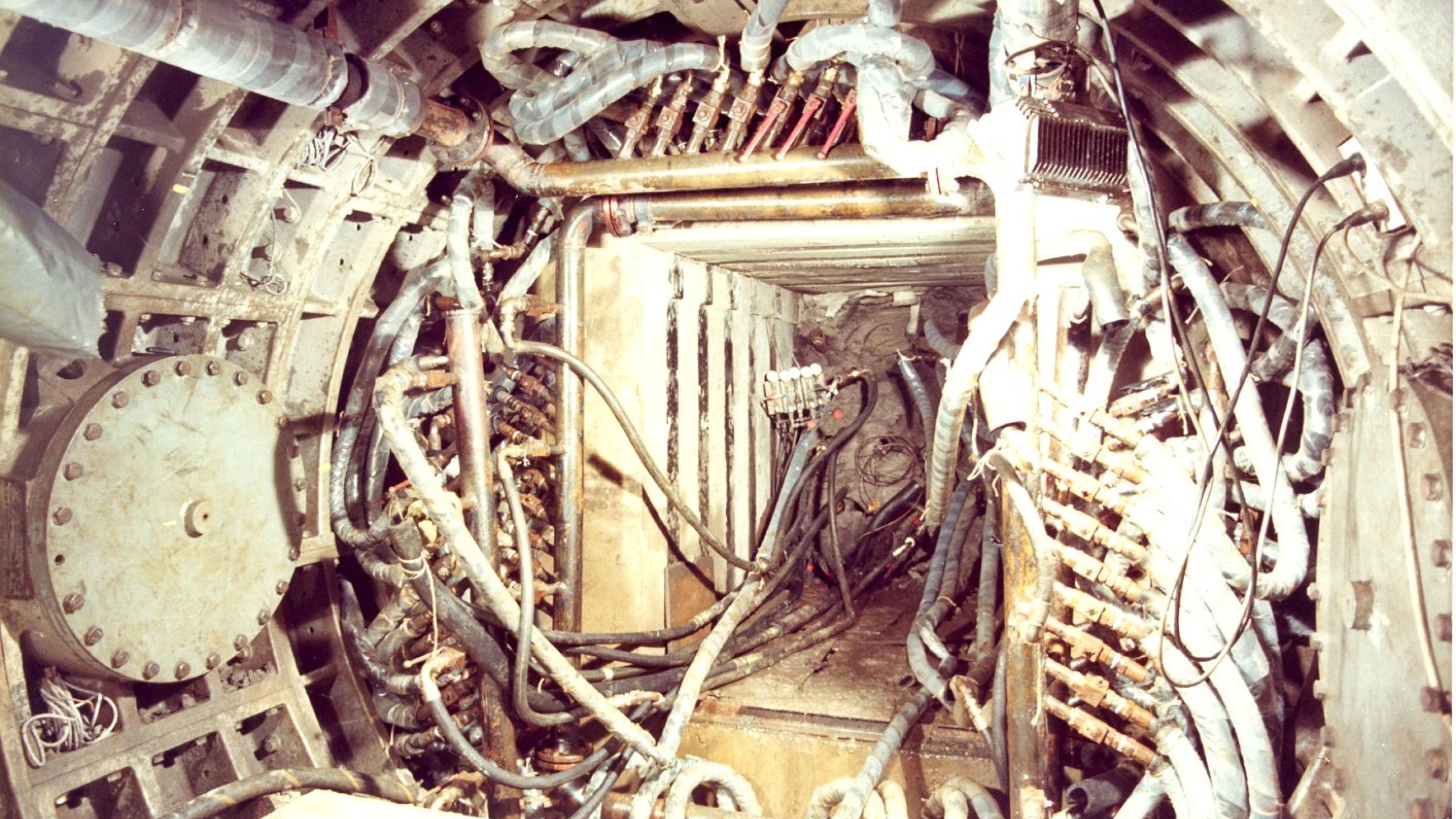
During the 1980s, the excavation of HADES was truly pioneering work. For the excavation of the first shaft and gallery, the Boom Clay was frozen before it was manually excavated. This was done with a conventional technique with freezing tubes in which a brine solution at -17°C was circulated. Once the clay was frozen solid, it was manually excavated. Moreover, cast iron rings were installed as gallery lining. This proved to be overshooting in terms of safety, it was indeed possible to excavate in unfrozen clay and use concrete blocks instead of cast iron rings as lining.
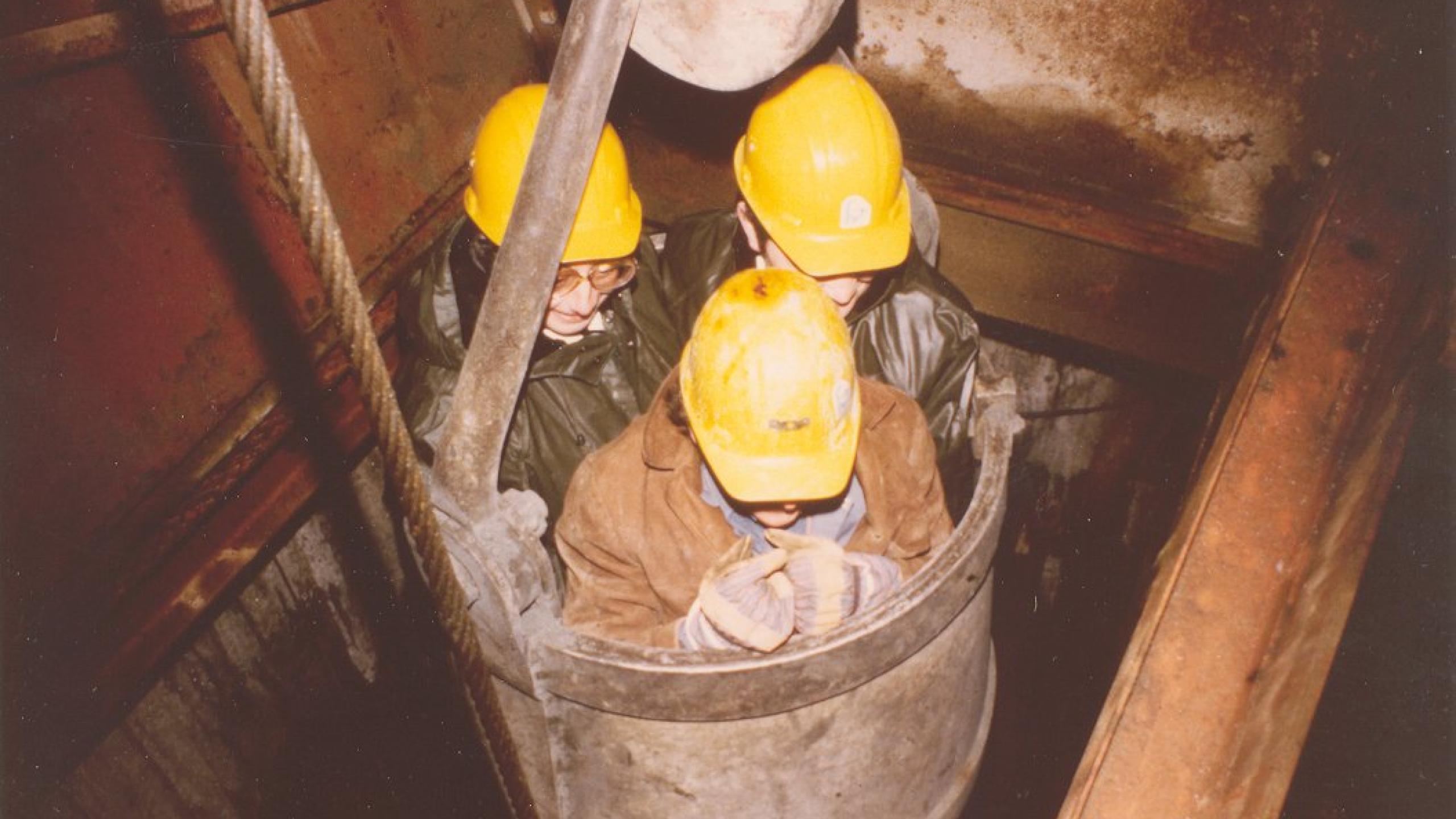
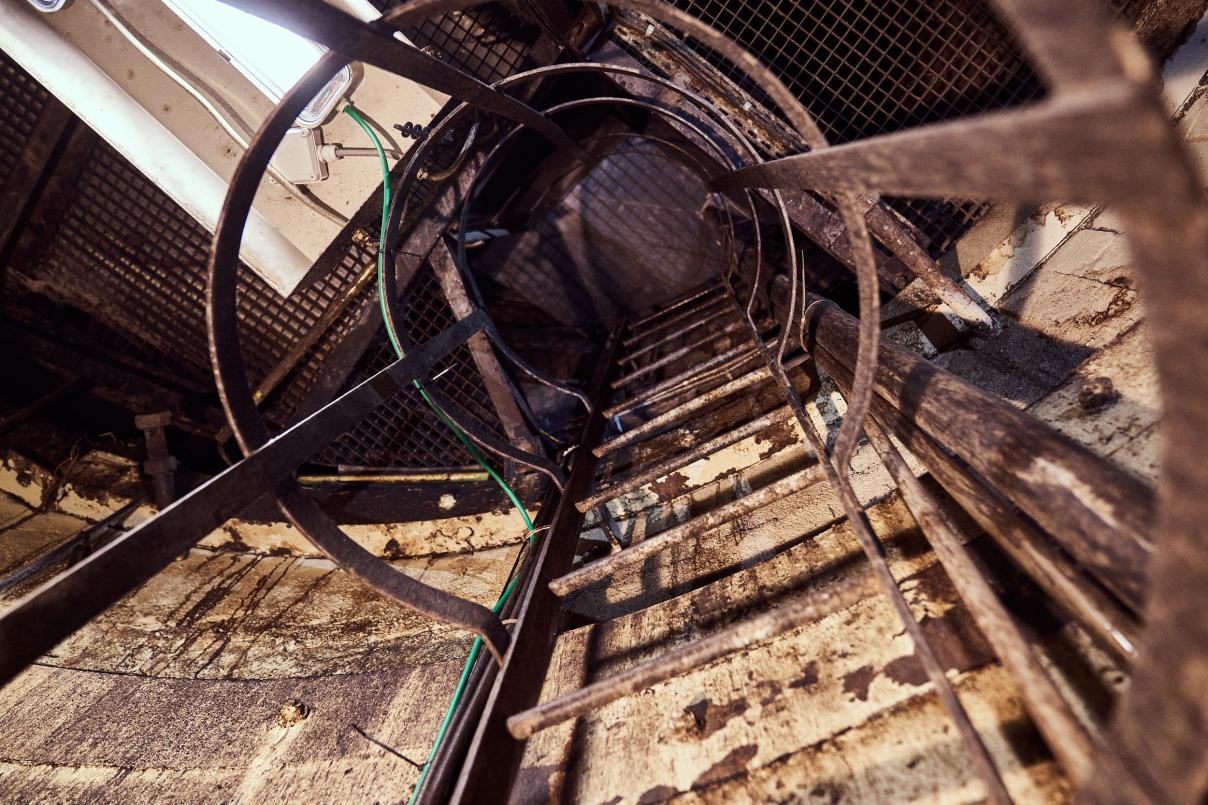
By the late 80s, HADES was a 71 meter long gallery, with a 40 meter deep experimental gallery and shaft, which was accessible via one access shaft.
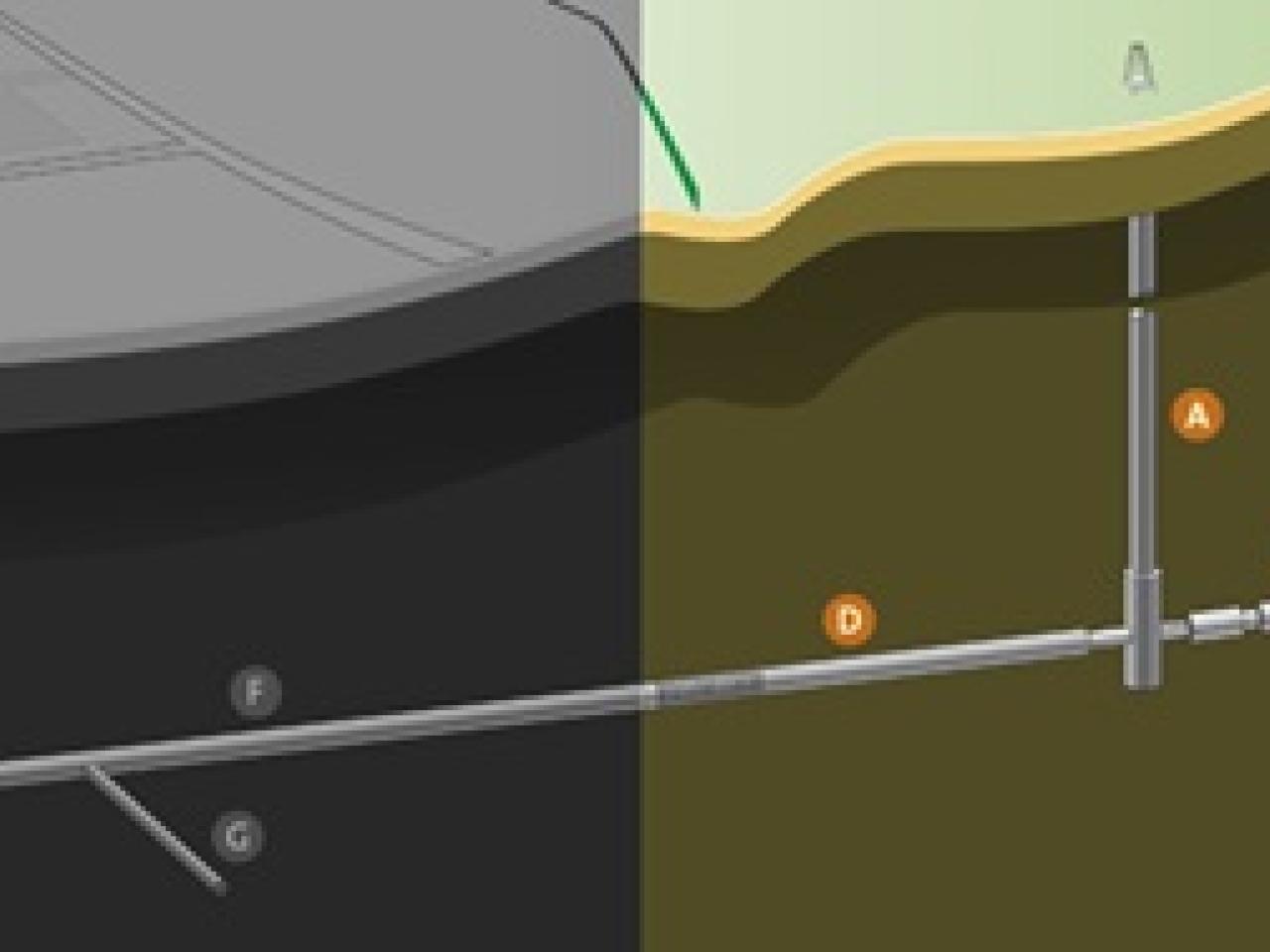
Constructing HADES in the 1980's
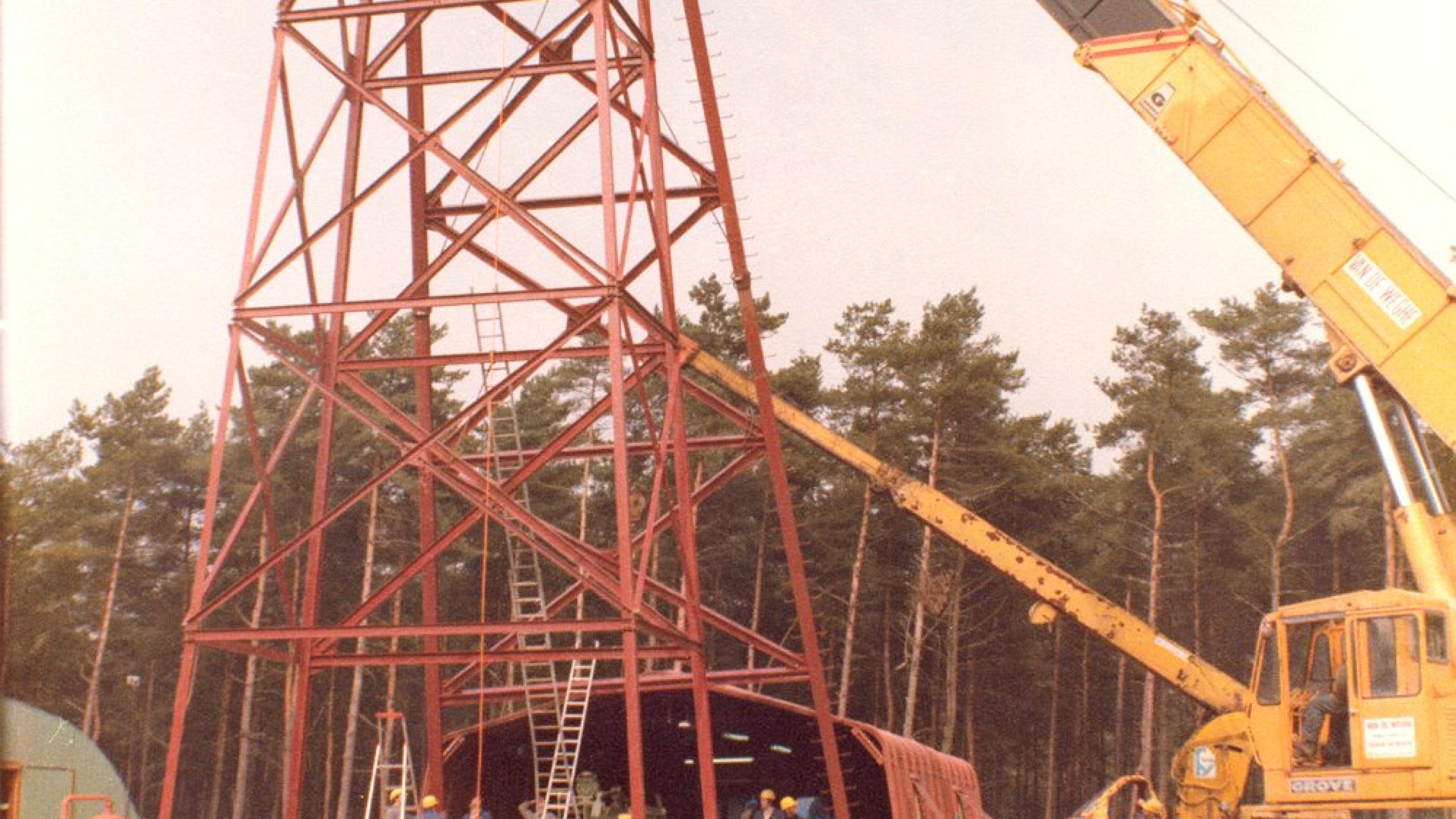
(A) 1980-1982: First shaft
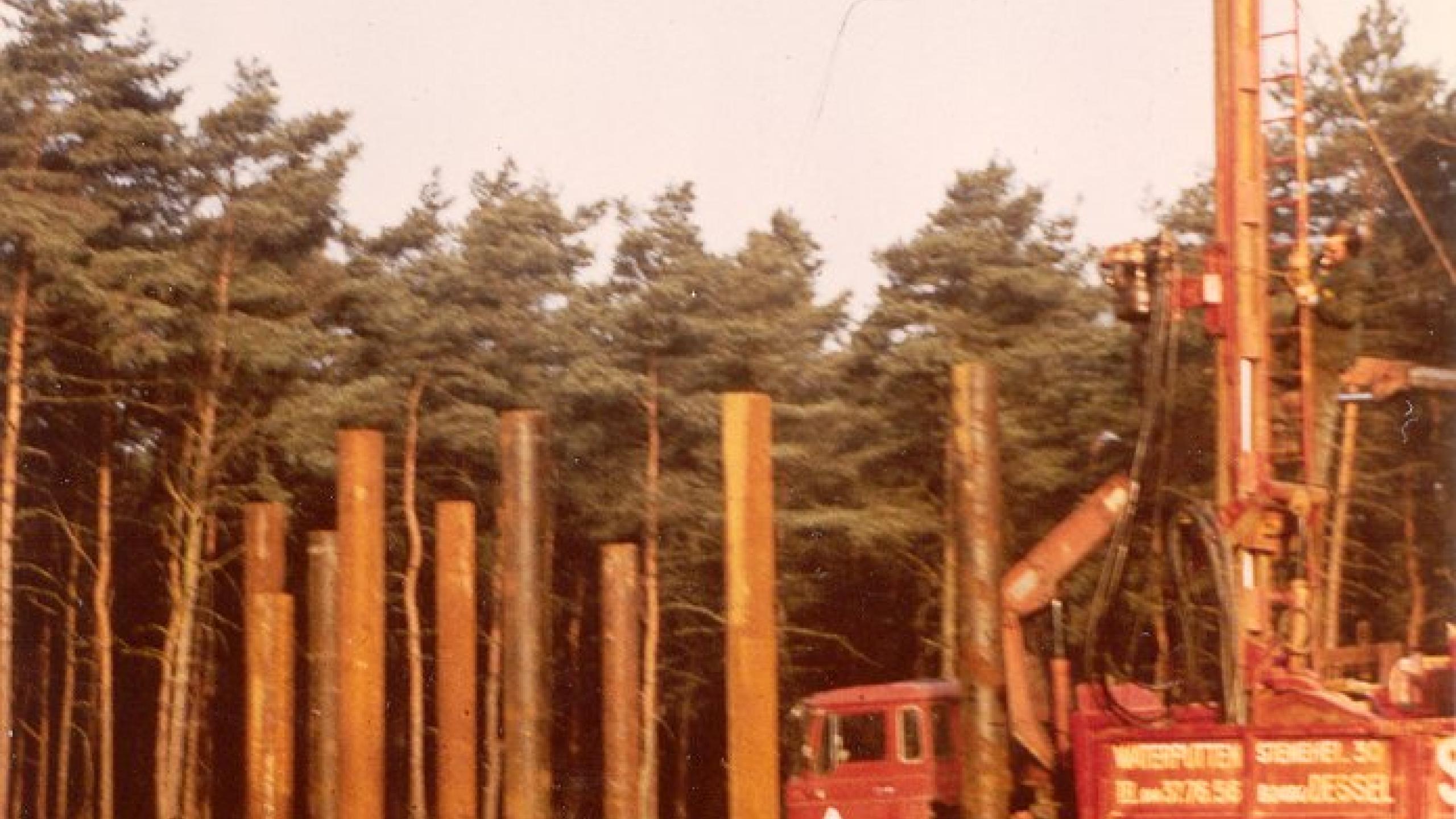
Excavation work began in 1980. Engineers were concerned that the poorly indurated clay deep underground would close relatively quickly during excavation. The soil and the clay were therefore frozen down to a depth of 240 metres.
(B) 1983-1984: First gallery
A first gallery (26 metres long and 3.5 metres in diameter) was excavated manually in frozen clay at a depth of 225 metres. Cast iron rings support the excavated gallery.
(C) 1984: Experimental shaft and gallery
The creep rate of the clay after thawing was found to be relatively low. As a confirmation test, it was decided to excavate a small experimental shaft and gallery in unfrozen clay. The shaft was 24 m deep, starting from the first gallery. Close to the lowest level, a 8.5 m long gallery was excavated. Both excavations have a 2 m external diameter. The support provided by concrete blocks was just as effective as cast iron rings, but was less expensive. The experimental shaft was then sealed off as part of the RESEAL experiment.
(D) 1987: Second gallery (known as the Test drift) and ANDRA gallery
The expertise gained was applied on a larger scale in 1987 to extend the underground laboratory. A gallery 51 m long and 3.5 m in diameter, called the Test drift, was excavated in unfrozen clay and supported with concrete blocks. Shortly after the construction of the Test Drift, a collaboration with ANDRA (the French counterpart of NIRAS/ONDRAF) resulted in the construction of the ANDRA gallery. Thas as a different type of support, a sliding steel rib system, over a length of 15 metres.