
PRACLAY
The PRACLAY experiment was developed to study the thermal impact of heat-emitting radioactive waste on the Boom Clay at a scale representative for future disposal conditions. To this end, a gallery entirely dedicated to this experiment, called the PRACLAY gallery, was constructed and instrumented in HADES to host a large scale heater test. The PRACLAY experiment is an important step in confirming the feasibility of a geological disposal facility in geological clay formations.
Design and timeline
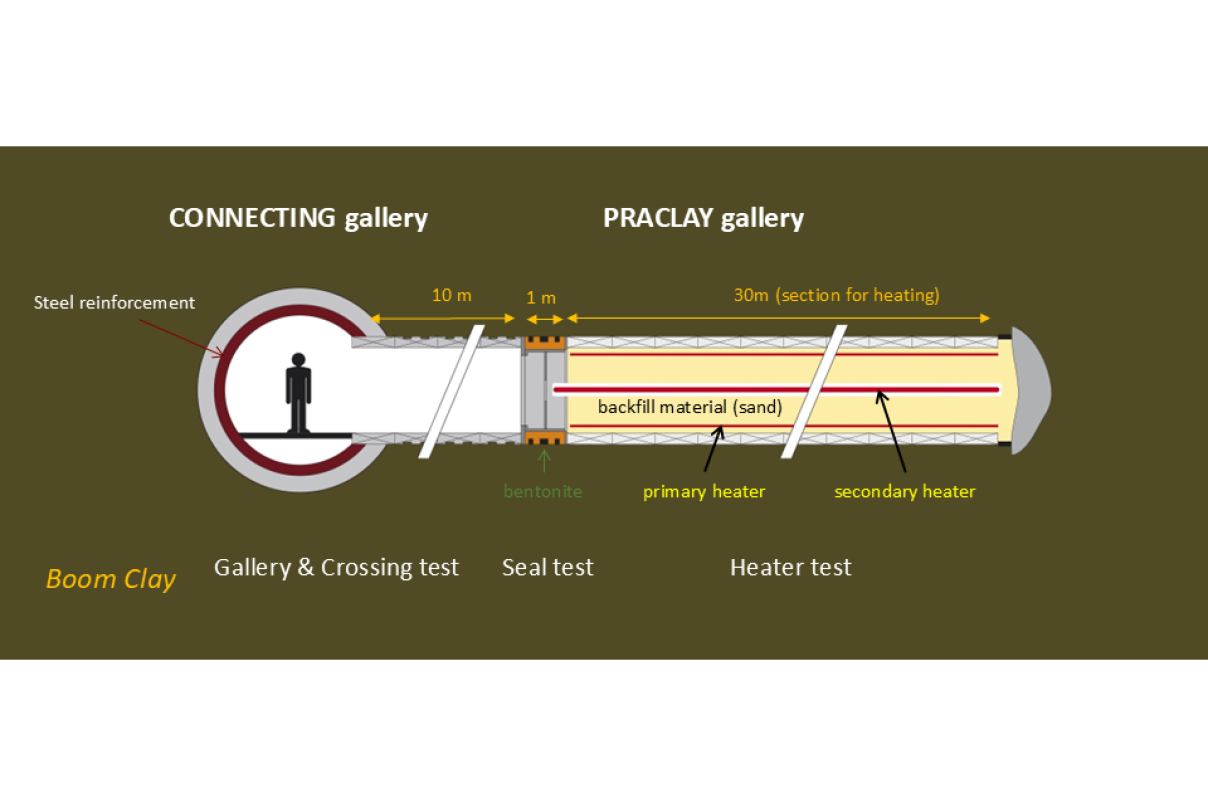
High-level radioactive waste gives off heat. In Belgium, the current concept plans to dispose of heat-emitting radioactive waste in a geological repository after 60 years of surface cooling. The waste will still generate heat, but studies show that the temperature at the interface between the gallery lining and the clay will not exceed 80°C. This is therefore the temperature that was used targeted in the PRACLAY heater test.
The thermal impact on the clay has already been studied in a number of small-scale heating experiments, as well as meter-scale experiments, the ATLAS tests. In 2007, the 45-metre long PRACLAY gallery was constructed perpendicularly to the connecting gallery to host the large-scale in situ PRACLAY Heater test. The construction of the PRACLAY gallery is known as the PRACLAY Gallery & Crossing test and provided the proof of principle in terms of feasibility of constructing crossing between galleries. The PRACLAY heater test aims to study the impact of heat on the Thermo-Hydro-Mechanical (THM) behaviour of the Boom Clay in conditions and scale that are representative of a waste repository and to confirm and refine existing knowledge gained from the small-scale heating experiments. The PRACLAY Seal test is related to the design, installation and functioning of the seal, which separates the heated part to the non-heated part of the PRACLAY gallery. Together, the Gallery & Crossing test, the Seal test and the Heater test make up the PRACLAY Experiment.
How do we monitor what happens in the clay and the sealed-off gallery for such a long time? Explore it further on the long-term monitoring web page.
- Excavation of the PRACLAY gallery
The construction of the PRACLAY gallery, referred to as the Gallery & Crossing test was performed in 2007. It demonstrated the feasibility of using industrial excavation techniques to build disposal galleries perpendicular to a main gallery.
- Installation of the seal
The construction that seals off the PRACLAY heater test from the rest of the gallery, is referred to as the Seal test.
- Installation of the heater test
The heater is comprised of metal heating elements mounted on the concrete wall of the gallery. After installation the gallery was backfilled with water saturated sand and the seal was closed to seal off the heated part of the gallery from the rest of HADES.
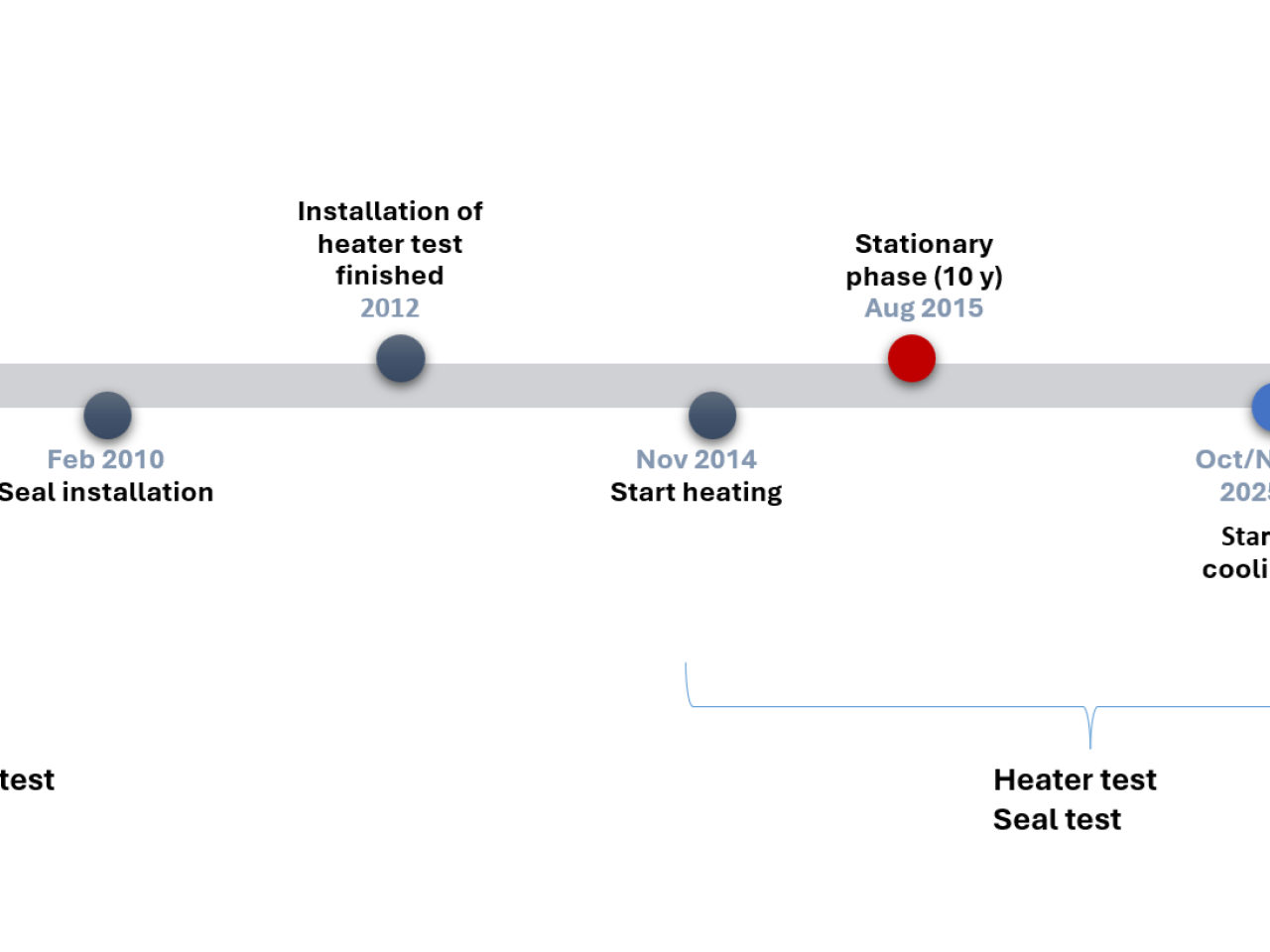
- Start heating
Stepwise increase of the heat was done to reach the desired temperature
- Stationary phase
During the large-scale in situ heater test, the experimental setup successfully reached and maintained 80°C at the contact between the clay and the concrete lining
- Start cooling
The heater power was turned down late 2025 after 10 years of heating at 80°C and 11 years after the start of the heating.
- Dismantling & post-mortem analysis
The gallery will be opened up and dismantled after the cooling phase, this is foreseen in 2028 – 2030.
Gallery & Crossing
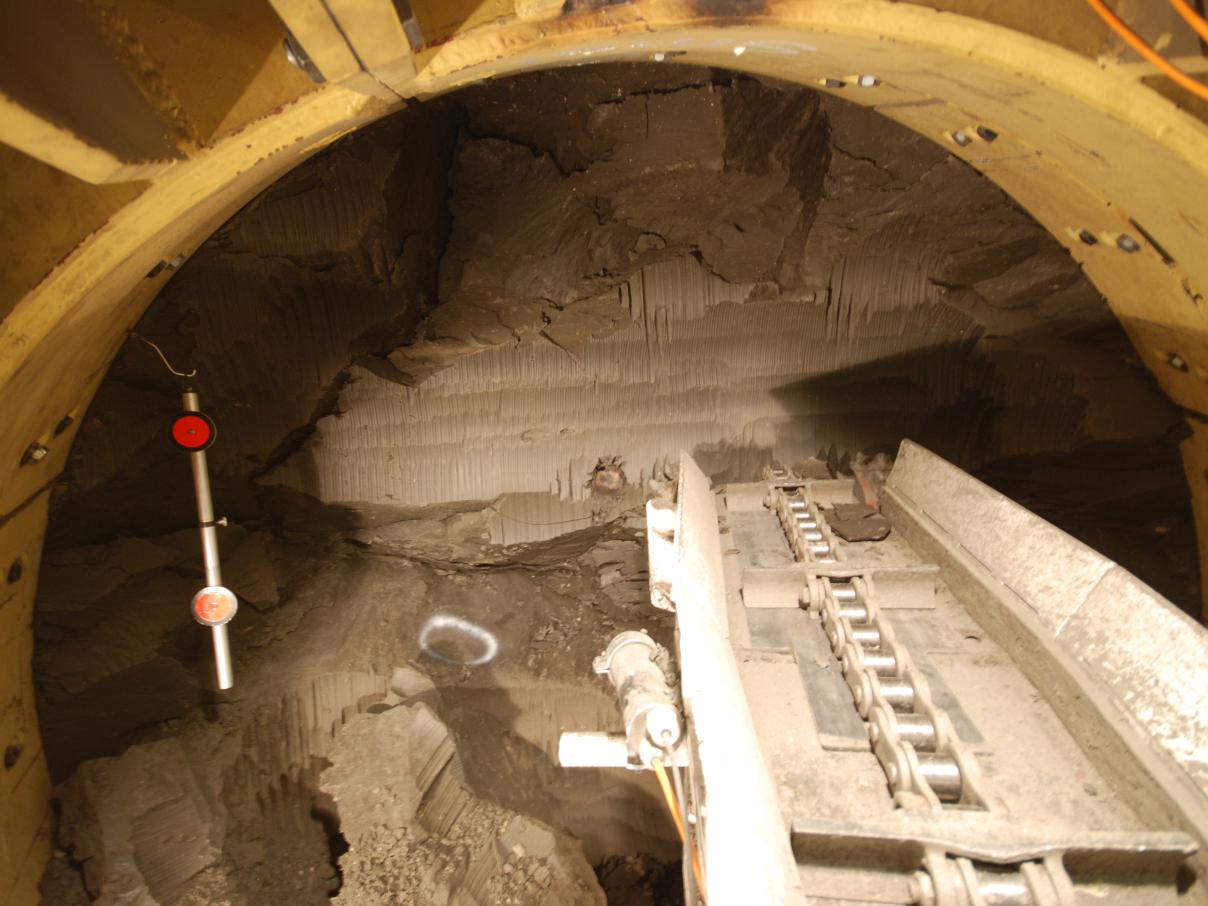
The construction of the PRACLAY gallery demonstrated the feasibility of using industrial excavation techniques to build disposal galleries perpendicular to a main gallery.
The first step was to install a steel reinforcement structure in the existing main gallery at the point where the excavation work was due to commence. The purpose of the reinforcement was to ensure that the main gallery would not collapse under the pressure of the soil above it when part of the wall was removed to start excavating.
While the work was under way, any changes in the clay layer were recorded on measuring instruments that had already been installed. This made it possible to accurately monitor any disturbances caused by excavation.
The Gallery & Crossing test indeed proved the feasibility of constructing galleries and intersections between galleries.
Seal
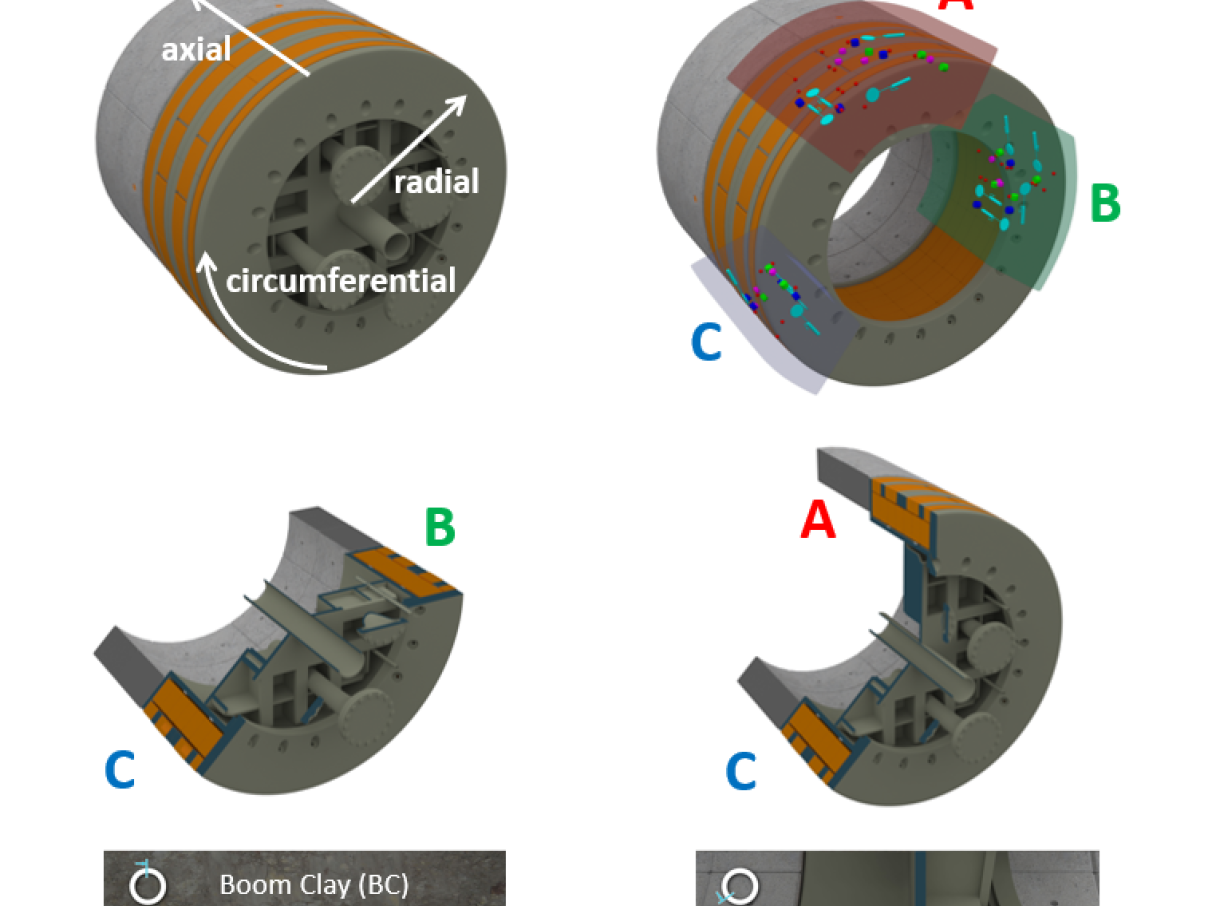
The PRACLAY Seal test was developed to support the PRACLAY Heater experiment, which studies how heat affects clay in deep geological disposal. To create controlled conditions, the heated section of the gallery must remain almost undrained, meaning water cannot easily escape.
This is achieved using a hydraulic seal at the junction between heated and non-heated parts of the gallery. The seal consists of a watertight steel cylinder surrounded by a bentonite ring. Bentonite is chosen for its very low permeability and its ability to swell when hydrated, which helps close gaps around the seal and maintain high pressure in the heated zone. Sensors monitor the bentonite’s hydration and swelling to understand its thermo-hydro-mechanical behaviour. While this seal is specific to the PRACLAY test and not a real repository design, it demonstrates how bentonite can effectively block water flow.
Results confirm that the seal successfully creates the required conditions.
Heater test
Installation
The heating system comprises metal heating elements that are mounted on the concrete wall of the gallery and can be energised to generate heat, as in a conventional oven. Running through the middle of the gallery is a second heating system, which serves as a back-up and can take over heat production completely, if necessary.
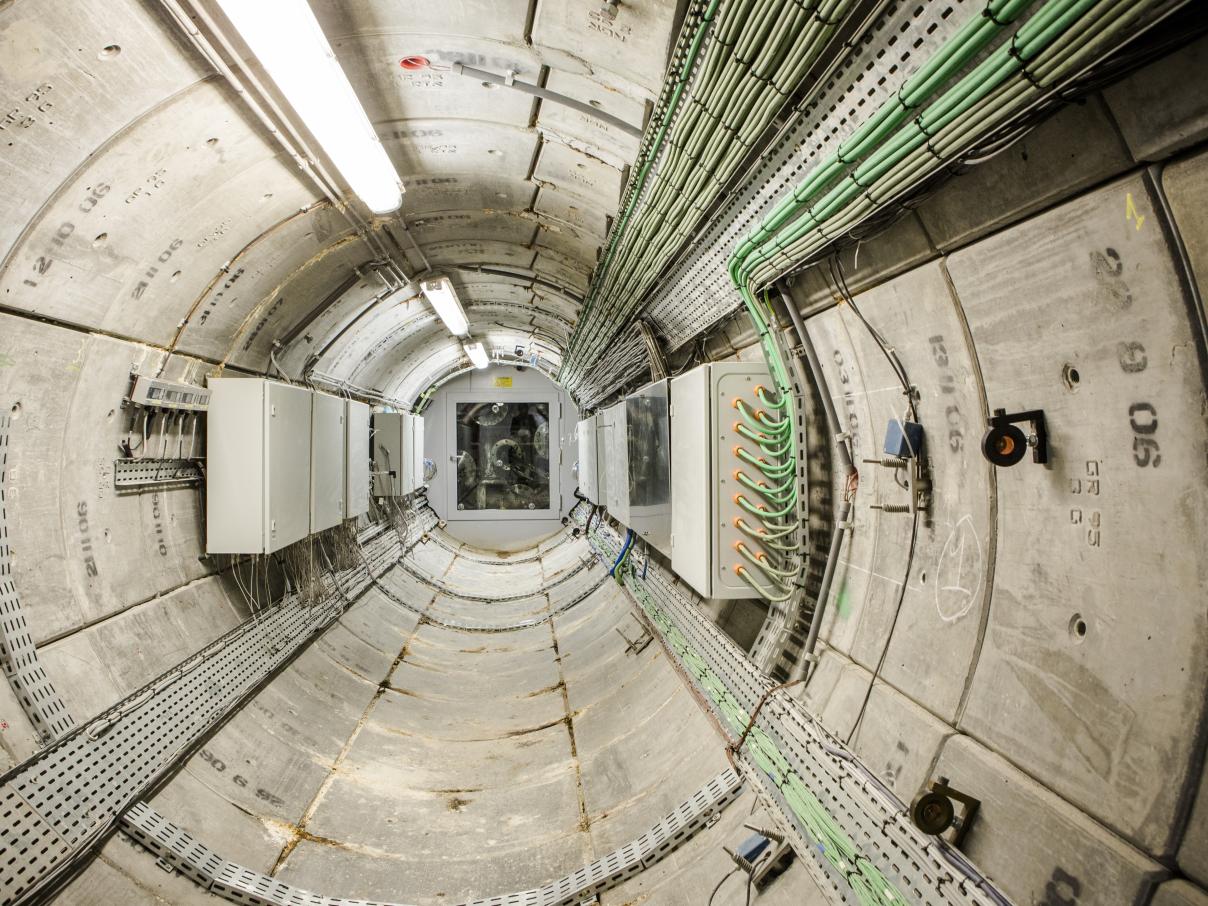
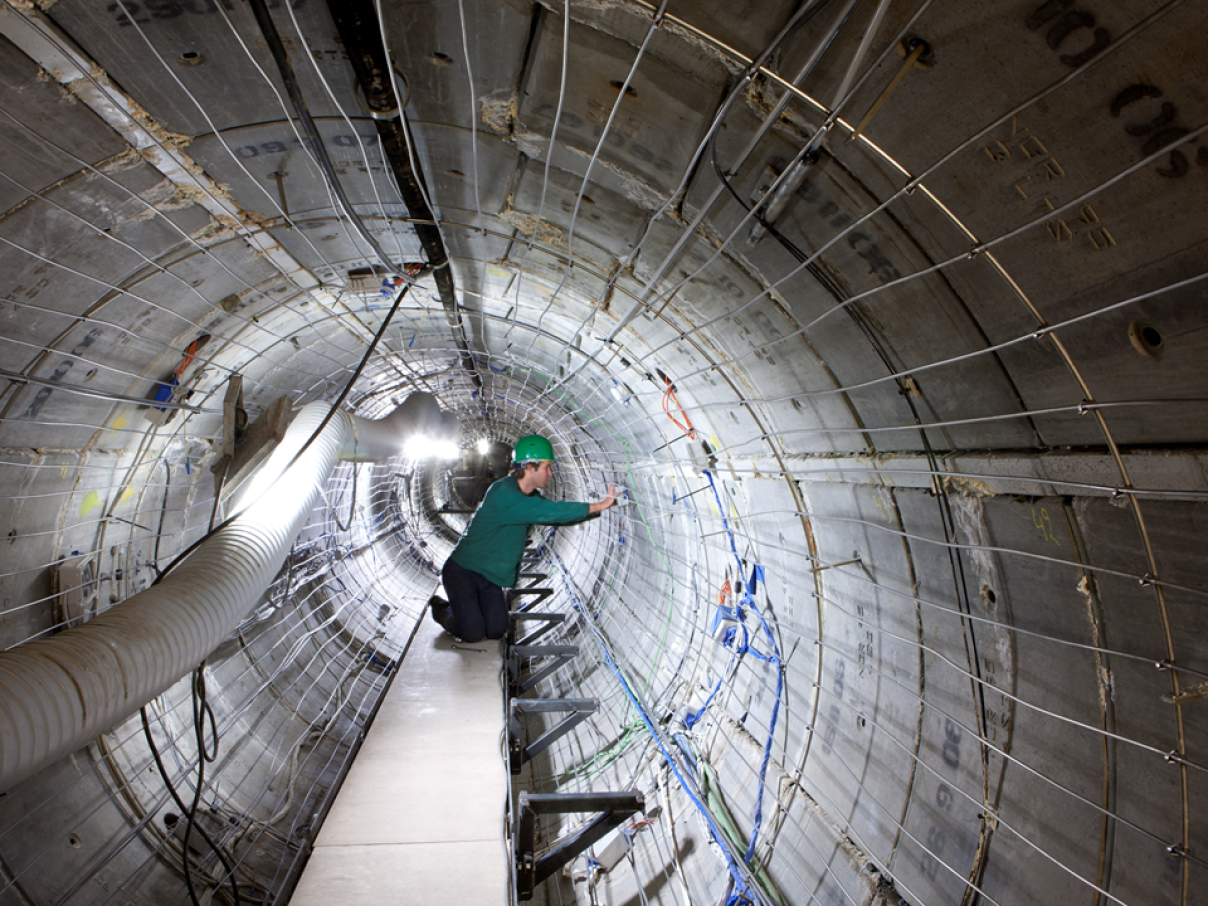
Once the heating system had been installed, the gallery was backfilled with water saturated sand and completely sealed off from the main gallery. The PRACLAY gallery seal is not part of the disposal concept under investigation but is essential to ensure even distribution of heat and pressure in and around the heated area throughout the heating phase. Hundreds of cables connected to the heating system and the measuring instruments in and around the gallery pass through this seal.
Heating
The heating was activated on the 3rd of November 2014. The power was increased stepwise, from 250 W/m to 350 W/m to eventually 450 W/m, which led to the target of 80°C at the interface between the clay and the concrete. This temperature was reached in August 2015 and kept constant for a decade.
The results in terms of temperature evolution in time, and profile in function of the distance from the gallery correspond to the models that were calculated.
Cooling
On November 3rd, the heater power was switched off, exactly 11 years after it was switched on. The team at EURIDICE follows up the temperature evolution and profile in the gallery and the clay during this cooling period, which will take about a couple of years and continues to give valuable insights in the THM-behaviour of the Boom Clay.
Dismantling
Dismantling and post-mortem analysis of the PRACLAY heater test, and also of the Seal test, is currently being planned by the EURIDICE team. The seal will be removed and its materials will be investigated, the gallery lining of the heated part of PRACLAY will also be examined. This means that the PRACLAY experiment is not yet finished and will run for a few more years.

Want to explore the science behind PRACLAY?
Interested in exploring the science behind the PRACLAY heater test? Have a look at the presentations given during the 27th Exchange Meeting.
PRACLAY 2025: closing the heating chapter – opening the cooling phase.