Infrastructure
The HADES installation is perfectly suited for in situ research and demonstration tests in a deep clay layer. It was designed as a generic laboratory to study radioactive waste disposal in clay. Underground research offers the opportunity to study the safety of a disposal system under realistic conditions and to demonstrate its technical feasibility. This makes it possible to acquire the expertise needed to develop a waste repository that meets all the safety requirements. Our underground laboratory allows us to study the characteristics of a clay environment, and provides an opportunity to observe and understand the interaction between the host rock, the waste and the engineered barriers. With a wide variety of experiments, and the instrumentation and infrastructure to support them, HADES is key in several European projects.
Overview of the lab
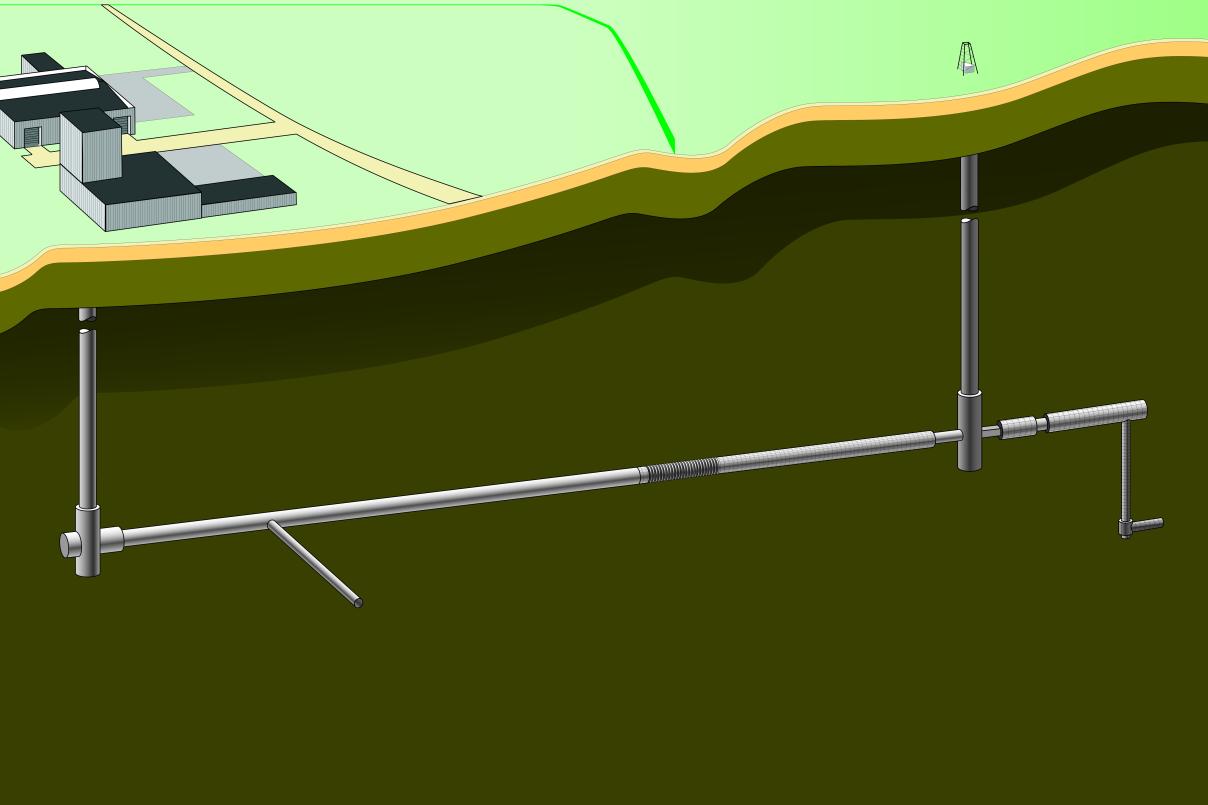
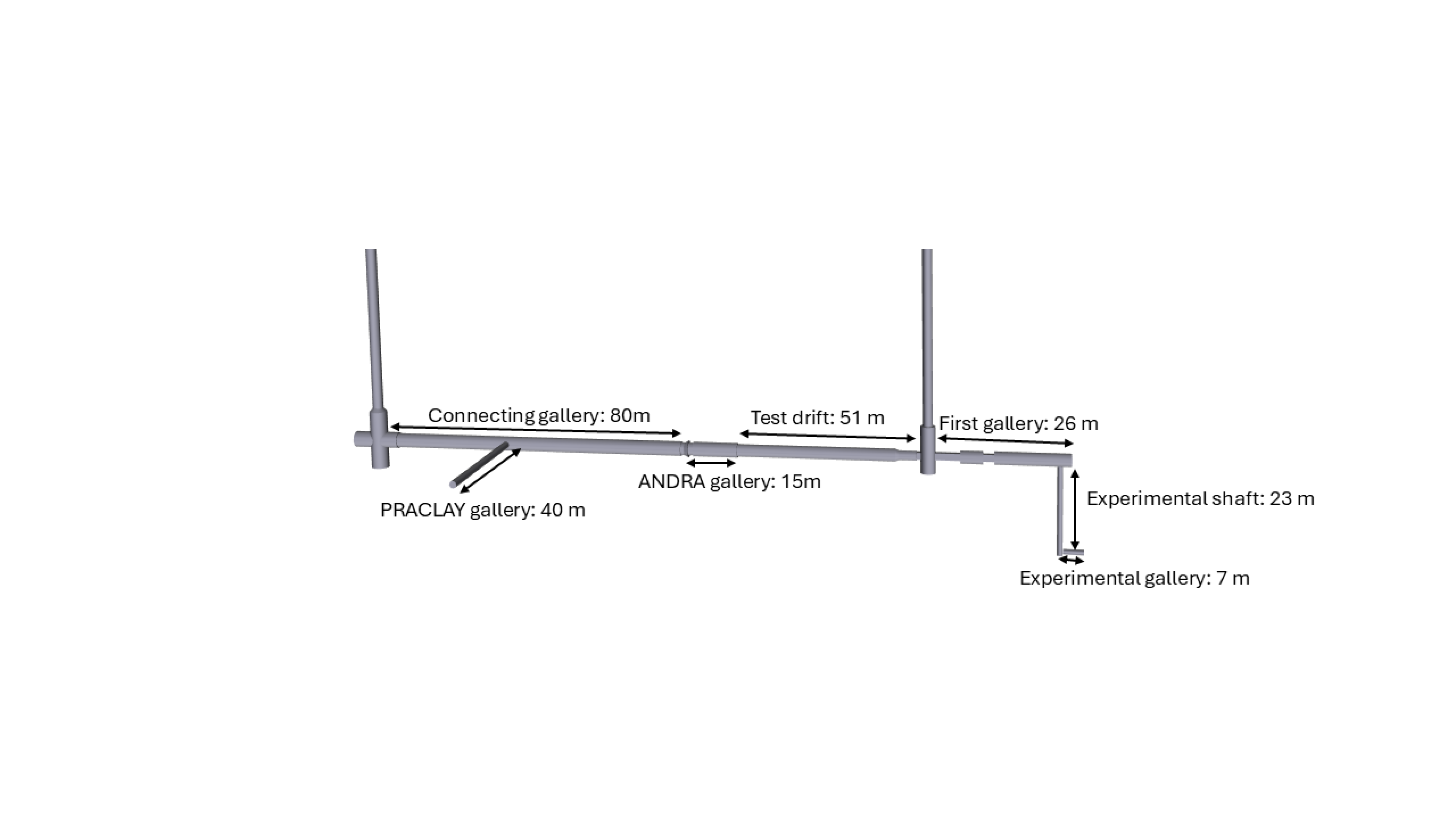
HADES includes a 180 meter long tunnel, accessible via two shafts and with one perpendicular 40 meter side gallery, at a depth of 225 meters. There is also a 23 meter deep experimental shaft excavated from the main tunnel, from which a 7 meter long gallery was excavated at a greater depth than and parallel to the main tunnel, both have an internal diameter of 1.4 meter. The main tunnel consists of four parts that were excavated at different times, with various techniques and using four types of gallery lining, which are chronologically the first gallery, test drift, ANDRA gallery and connecting gallery.
LLeeaarrnn mmoorree aabboouutt tthhee ccoonnssttrruuccttiioonn ooff HHAADDEESS hheerree
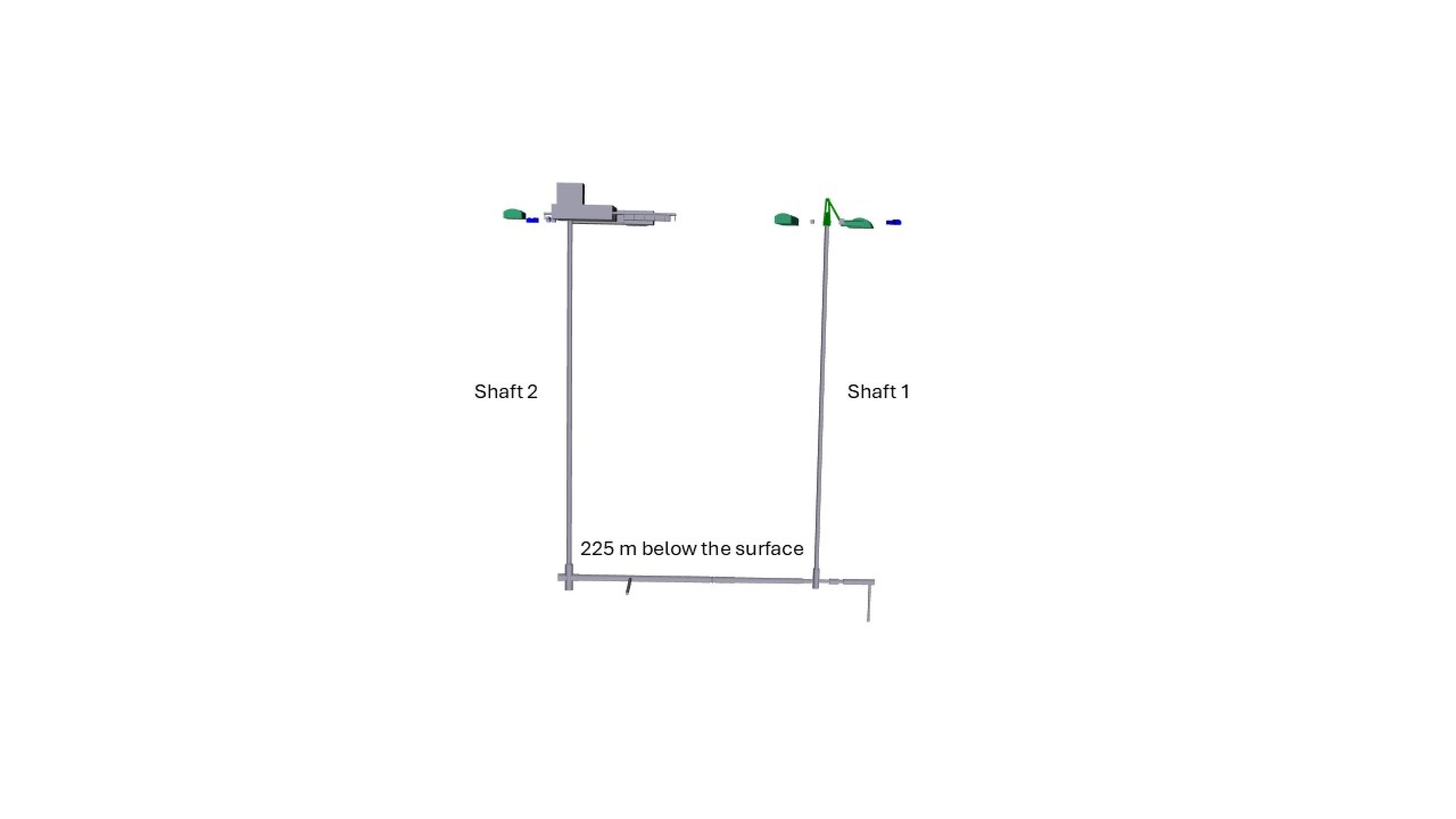
HADES can be reached through one of two shafts. Boths shafts are 240 meters deep, with an inner diameter of around 2.5 meters. The hoisting cages are designed to transport people and equipment. In our hoisting cage of shaft 1, 7 people in total can decent to HADES. The hoisting cage of shaft 2 is bigger and can accommodate 10 people. The hoisting installations are suitable to transport heavy machinery such as the tunnelling equipment that was used to excavate the connecting gallery and the PRACLAY gallery down to HADES.
HHooww ddoo wwee kkeeeepp oouurr hhooiissttiinngg iinnssttaallllaattiioonn uupp ttoo ddaattee??
A wide variety of experiments are installed throughout HADES. The underground research lab is fully equipped to monitor its experiments remotely. Data management and electrical installations are up to date. In HADES, we can host experiments in our existing boreholes and piezometers. Moreover, we are equipped to drill new holes into the clay in all directions and of various diameters. We not only have the equipment but we have the expertise to do so, with our team of experienced technicians and engineers.
RReeaadd aallll aabboouutt oouurr ooppeerraattiioonnss&&ssaaffeettyy tteeaamm hheerree
How many experiments are running in HADES?
Where are they located?
What are we testing?
Who contributes to which experiments?
Unearth it all here!