HADES in the European context
Deep disposal of radioactive waste has been internationally accepted as the only suitable final solution to guarantee the safety of the generations that come after us. In Europe, quite a few countries rely to a certain extend on atomic energy for their power supply, generating radioactive waste in the process. This implies that research has been ongoing for many decades, since the rise of nuclear power in the sixties.
HADES is the oldest underground research lab in Europe, and the first laboratory in a deep clay formation worldwide. Moreover, it is the first underground facility purely built to study radioactive waste disposal. Most other URLs were installed in existing mines and tunnels.
But let's not dwell in the past and focus on the current situation in Europe and the many projects in which HADES is involved. HADES indeed remains invaluable for the Belgian programme and necessary for many European experiments.
URLs in Europe
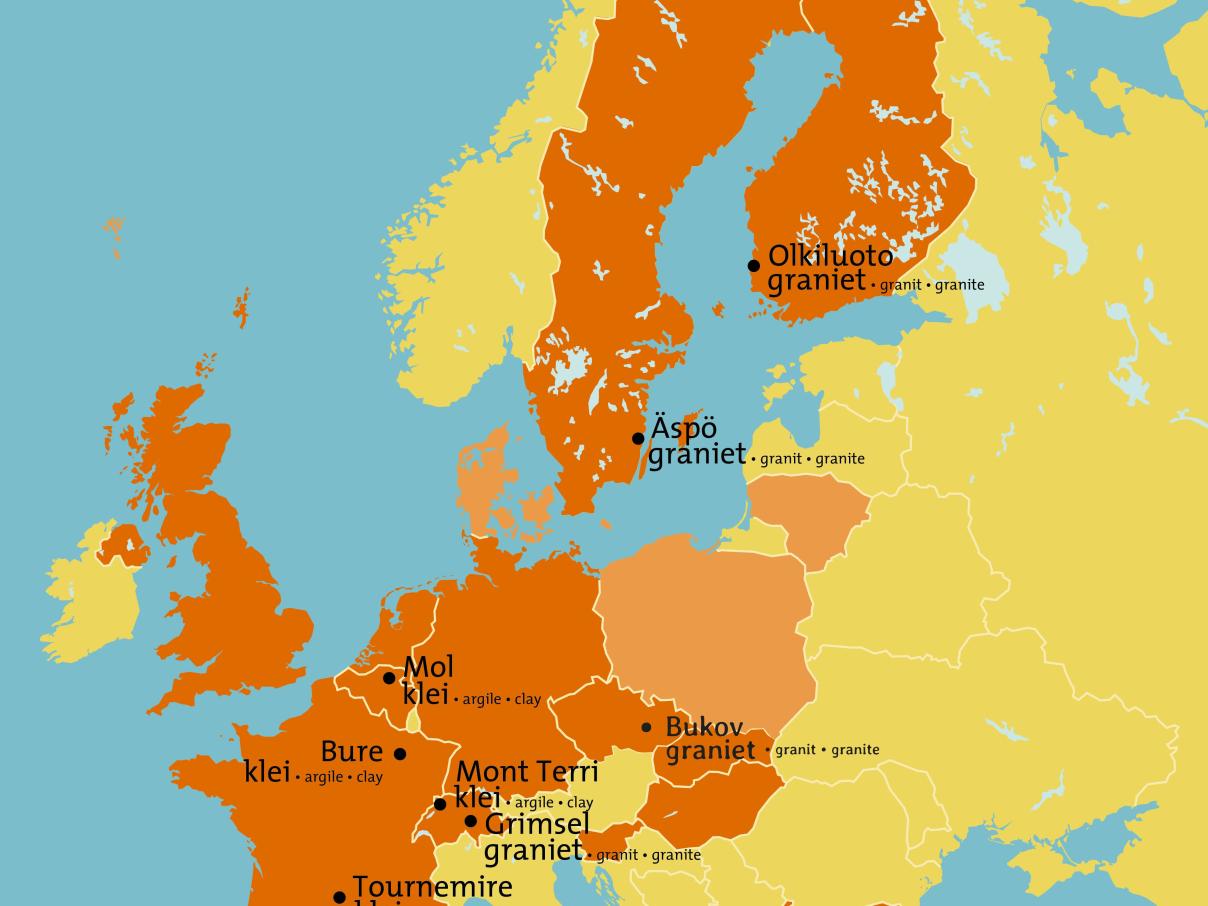
Several European countries, including the Czech Republic, France, Finland, Sweden, and Switzerland, host underground research laboratories. Finland and Sweden have chosen to dispose of their spent fuel in deep repositories built into granite: Finland’s Onkalo spent nuclear fuel repository is under construction, while the Swedish repository awaits a construction license. France and Switzerland have opted for argillaceous formations and have submitted license applications. In the Czech Republic, the site selection process is ongoing.
The level of development of deep disposal repositories varies among the other European countries with nuclear power plants, and thus with relevant quantities of radioactive waste. All of these countries have chosen to dispose of at least their high-level waste deep underground. Germany is building a repository for its heat-emitting waste. Site selection procedures are in progress in Lithuania, Slovakia, and the United Kingdom (without a predefined choice of host rock), while they have not yet started in other countries.
Research is ongoing and forces are joined within Europe in EURAD, the European partnership on radioactive waste management.
European research in HADES
The European Commission has played a crucial part in the development and implementation of many experiments and tests in HADES. Over a dozen experiments and projects benefit from EU support. In some cases, the project phase has ended but the measurement data are still being monitored or the experimental set-ups are being re-used as part of the Belgian research programme on geological disposal.
CChheecckk oouutt wwhhiicchh ooff tthhee HHAADDEESS eexxppeerriimmeennttss aarree EECC ffuunnddeedd
JRC research in HADES
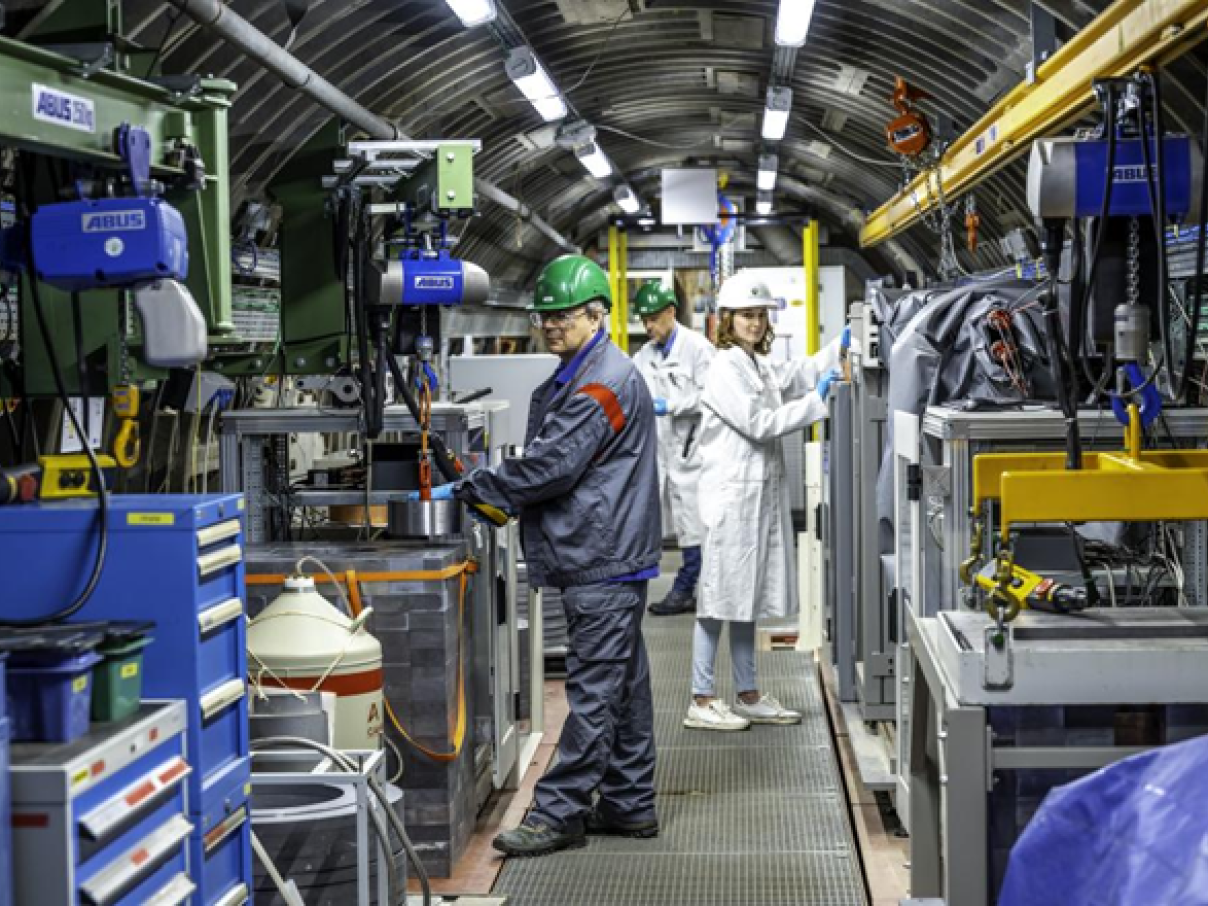
Even though HADES was purposely built to study radioactive waste disposal, it is also the perfect location for other scientific work. A team of the Joint Research Centre (JRC) in Geel uses part of the oldest, first gallery for their experiments. Thanks to the thick shielding from cosmic rays, HADES offers an environment where even the faintest traces of radioactivity—just a few nuclear disintegrations per day—can be detected. With eleven custom-built gamma-ray detectors and a passion for scientific discovery, the JRC team supports projects ranging from environmental tracing to rare nuclear decay studies.
UUllttrraa llooww--lleevveell ggaammmmaa rraayy ssppeeccttrroossccooppyy iinn HHAADDEESS
NIRAS-ONDRAF keeps a worldwide watch on other radioactive waste management programmes. Their website is kept up to date yearly. If you are interested, we encourage you to have a look!