
Transport of gas in clay
The low permeability and self-sealing capacity of the Boom Clay are very important properties to ensure the containment of radioactive waste. Because of the corrosion of metallic elements present in the disposal facility, and the radiolysis of water, gases such as hydrogen will be produced inside a repository. The processes that control the evacuation of these gases must be understood well to guarantee that the favourable properties of the clay will not be affected by the passage of gas.
Gas transport occurs firstly by dissolution into and diffusion through clay pore water, a process previously studied in laboratory conditions. To confirm the findings obtained in the small-scale laboratory experiments on a scale representative of a geological disposal facility, the HADES lab hosts an in-situ experiment called NEMESIS. This experiment aims to evaluate how the diffusion of dissolved gases behaves when upscaled.
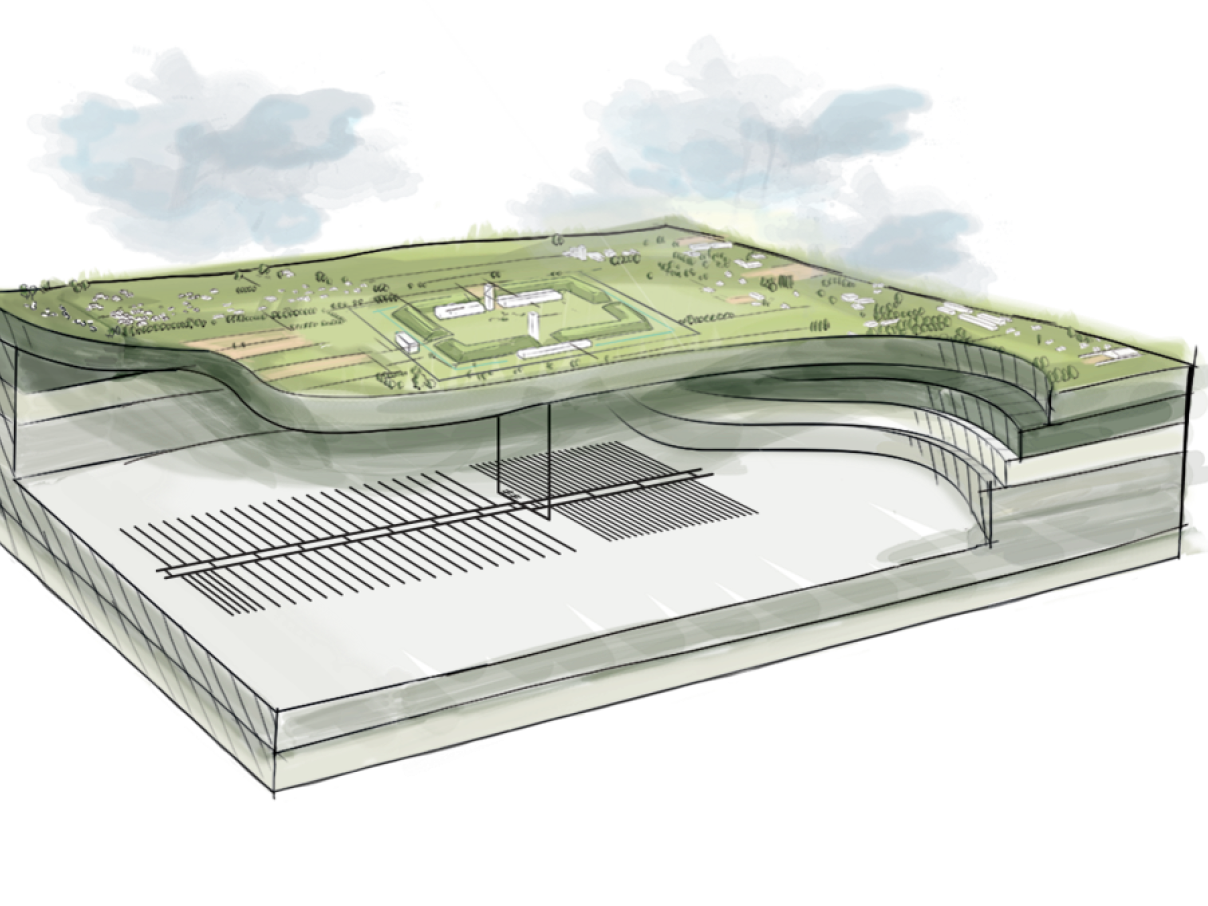
Gas in a disposal facility?
Inside a geological repository, gases, can form over very long timescales. This will be mainly hydrogen, due to anaerobic corrosion of metals in waste packages and structural components. Because clay host rocks like Boom Clay have extremely low permeability and fine pore structures, gas evacuation is slow. Initially, gas dissolves in pore water and diffuses away into the clay surrounding the repository. If production outpaces diffusion of dissolved gases, a free gas phase may develop and cause in increase in pressure. When a certain pressure is reached, the gas escapes from the facility by creating its own pathways, i.e., through fractures in the engineered barriers and/or clay. The evacuation of gas via the formation of such fractures should be avoided, as these could disrupt the functioning of the geological disposal facility.
Read more about gas diffusion in a deep disposal system on the NIRAS-ONDRAF website (only available in French and Dutch)
Laboratory Gas Diffusion Tests and Early Research
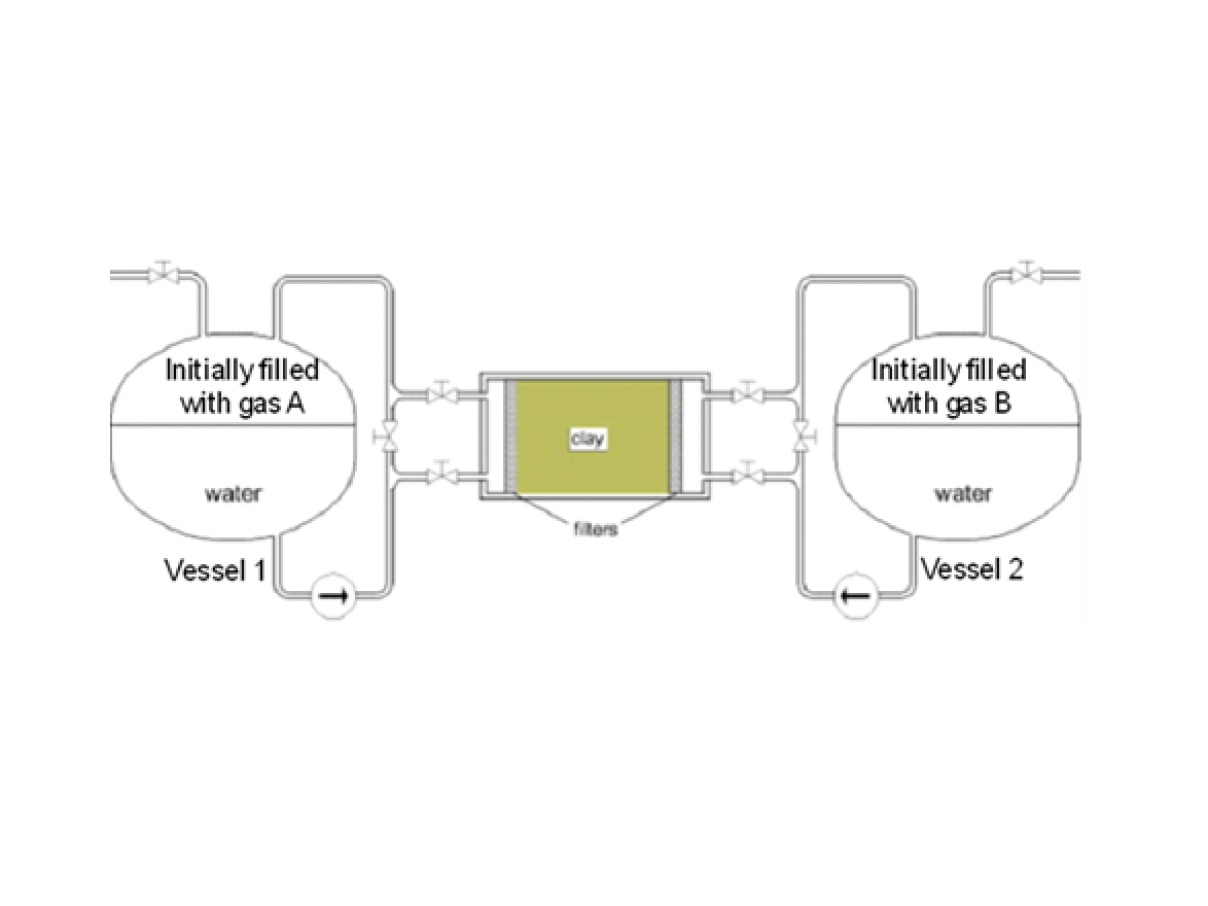
For decades, researchers have measured diffusion coefficients of dissolved gases such as helium, neon, and hydrogen in Boom Clay using centimeter-scale samples in the SCK CEN laboratories. These tests employed a robust double through-diffusion technique, where gas dissolved in water diffuses through a clay core under controlled conditions. Results revealed anisotropy in diffusion, with faster transport parallel to bedding planes. While these laboratory studies provided essential data, a key question remained: do these coefficients hold true at meter-scale under conditions that are representative to the clay surrounding a real disposal facility? Past in-situ tracer experiments in HADES, the migration experiments, validated radionuclide transport parameters at different scales and in different orientations. Inspired by these successes, researchers launched NEMESIS to investigate gas diffusion in Boom Clay under repository-relevant conditions, with the aim of confirming laboratory findings, providing key features for upscaling and collecting suitable data for assessing the functioning of the geological disposal facility.
The NEMESIS Experiment in HADES
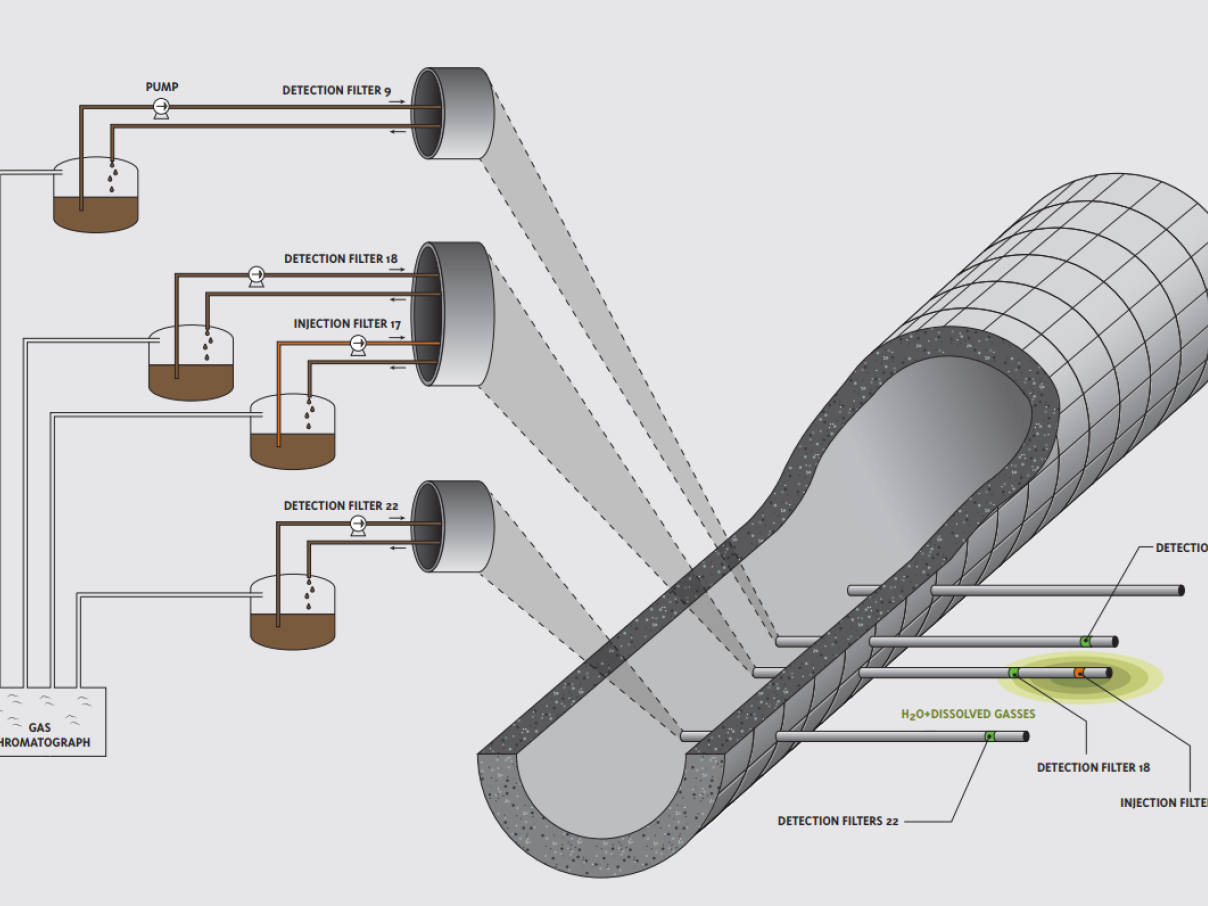
NEMESIS (NEon diffusion in MEgaS In-Situ experiment) is a large-scale in-situ test designed to measure gas diffusion coefficients in Boom Clay under repository-relevant conditions. Launched in 2020 by SCK CEN, EURIDICE, and NIRAS-ONDRAF, it builds on decades of laboratory research and reuses piezometers from the MEGAS project installed in the 1990s. These piezometers, arranged in a 3D configuration, allow investigation of diffusion anisotropy—differences in dissolved gas transport parallel and perpendicular to clay bedding planes.
The experiment uses neon as a tracer gas because it is inert, stable, and similar in size to hydrogen, the main gas expected in repositories. A source vessel introduces dissolved neon into the clay via a filter, while three target filters at various distances and orientations monitor its migration up to 0.8 meters away. Each circuit includes pumps, sensors, and a gas chromatograph for real-time analysis. Pressures are carefully controlled to match in-situ pore pressure, minimizing advective flow and ensuring diffusion dominates.
The NEMESIS experiment is still on going and will continue for several years. The first results are already very promising and suggest an excellent understanding of diffusion processes and estimation of properties for an effective upscaling from laboratory to repository conditions.
Read more about the NEMESIS project on the SCK CEN website