Thermo-hydromechanical behaviour
In HADES, we study the safety and feasibility of disposal of radioactive waste in deep clays. The clay surrounding the repository will act as a natural barrier, greatly slowing down the dispersion of any radioactive substances that could leach from the waste packages and the underground facility.
Clay is chosen because of its favourable properties: its plastic behaviour, low water permeability and retention of certain radioactive substances.
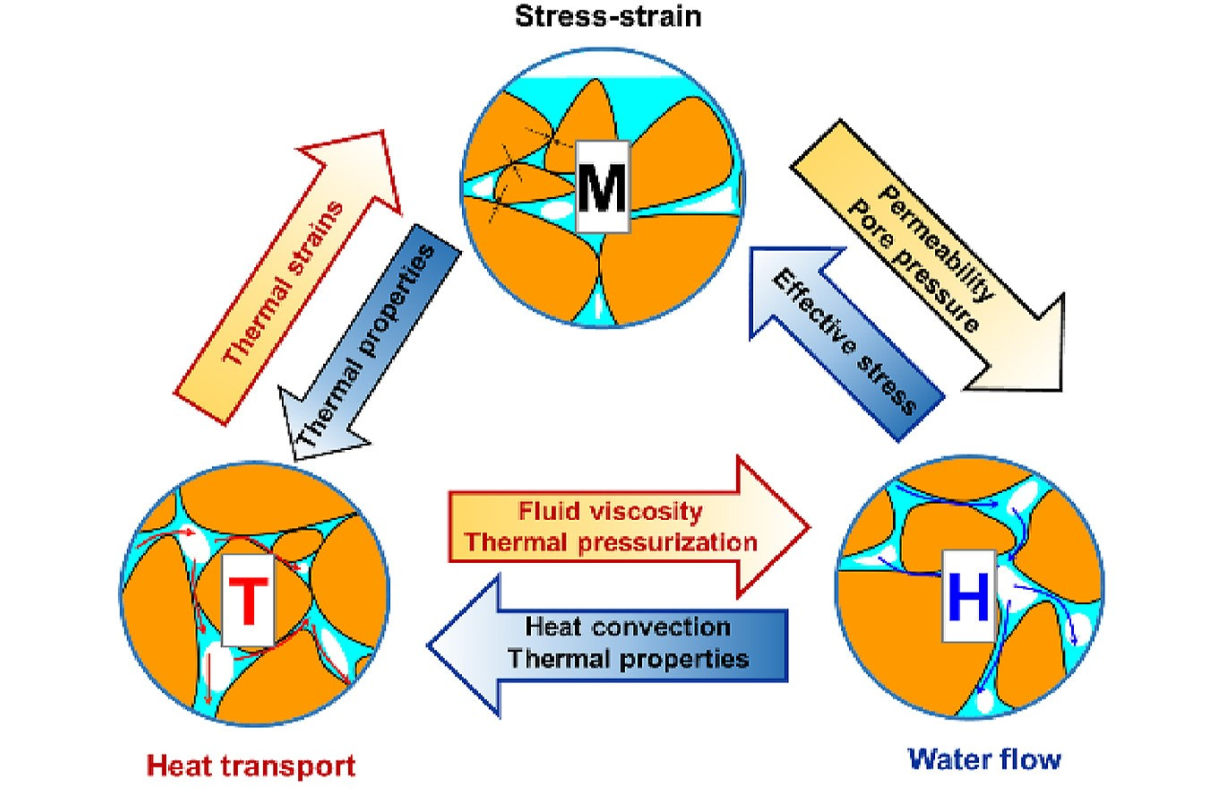
At the HADES Underground Research Laboratory, we focus on the excavation-damaged zone around disposal galleries and the effect of heat on the clay’s favorable properties. Heat from high-level waste can temporarily influence:
- Hydraulic properties (permeability and porewater pressure)
- Mechanical behavior (stress and deformation)
These processes are interconnected in a complex way, known as Thermo-Hydromechanical (THM) behaviour.