Gallery Inspection
At HADES, our Operations & Safety team plays a crucial role in monitoring the stability of the underground galleries. These structures have remained remarkably stable for decades, with the newest over 20 years old and the oldest exceeding 40 years. We need to make sure that it stays that way, by meticulously monitoring the stability and possible movements of the galleries. Not only is this necessary for ensuring the safety of our workers in HADES, it also generates unique data about the different types of lining under large pressures at 225 meters depth. Unique, because HADES is the oldest underground research lab in clay, which allows us to investigate the impact of the pressures and clay interaction on the gallery lining as a function of time over more than 40 years. These data are investigated by our researchers, as this is valuable input for the final safety case of a deep disposal facility.
How do we monitor the galleries in HADES?
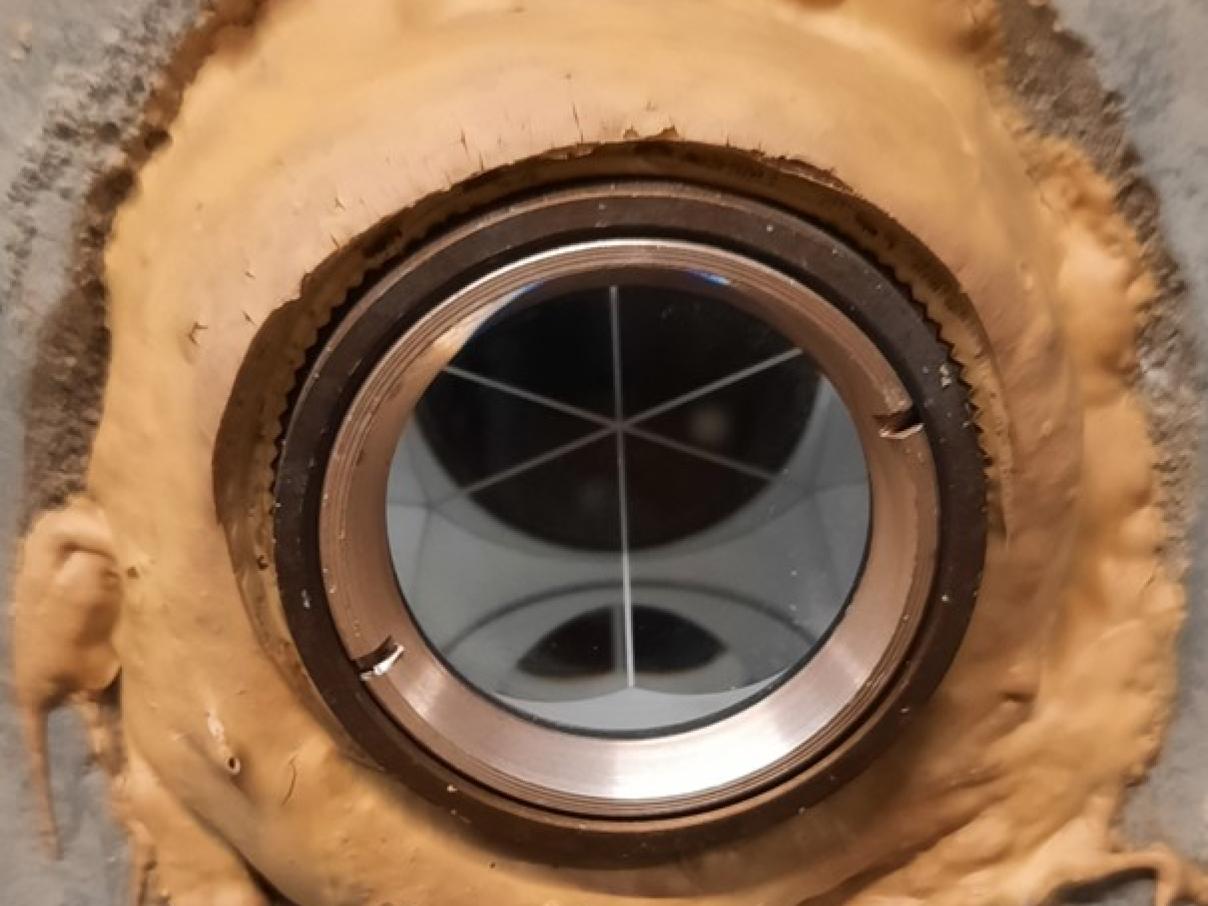
Two types of measurements are performed on the galleries by an external surveyor company. Our team accompanies this external firm to assist where necessary. They perform three-monthly topography measurements on the convergence of the galleries, using prisms that are incorporated into the lining segments at certain intervals to measure the exact position of the lining segments. This has been done in each of the galleries since the beginning of the construction, meaning that we have a very good overview of the movement of the galleries. In total, the concrete-lined gallery test drift has converged (became more concave due to the pressure of the overlying earth layers) by about 4 cm. Most of this ovalisation occurred in the first years after construction.
The external surveyor company has also started performing 3D scans in recent years. This is done once per year and fully maps the galleries in a way that can be implemented for 3D visualization and modelling.
Moreover, the team performs several measurements independently. Managed by our RD&D team, the following tasks are covered by the EURIDICE technicians:
- Complete Mapping and Inventory
Detailed mapping of the gallery linings, including identification of any cracks or fractures and assessment of their impact.
- Installation and Monitoring of Crackmeters
Crackmeters are placed at strategic locations to measure cracks in concrete segments. Data are read out periodically, to be used for stability assessment and modelling purposes.
- Periodic Measurement of Deviations and Movements
We measure shifts between concrete segments (in the test drift) or metal sliding ribs (in the ANDRA gallery). Frequency of the measurements depends on findings: sliding ribs are checked monthly, while overall displacement measurements occur annually.
- Photographic Documentation
Full photographic surveys of gallery linings provide snapshots for periodic comparison and long-term monitoring.
- Concrete Hardness Testing with Schmidt Hammer
A non-destructive method to check the relative hardness of concrete quickly and efficiently.
- Integrated Strain Gauges
Strain gauges installed in strategic segments measure stress levels on the structure. These sensors convert force, pressure, and tension into measurable resistance changes. Data is typically read every three months.
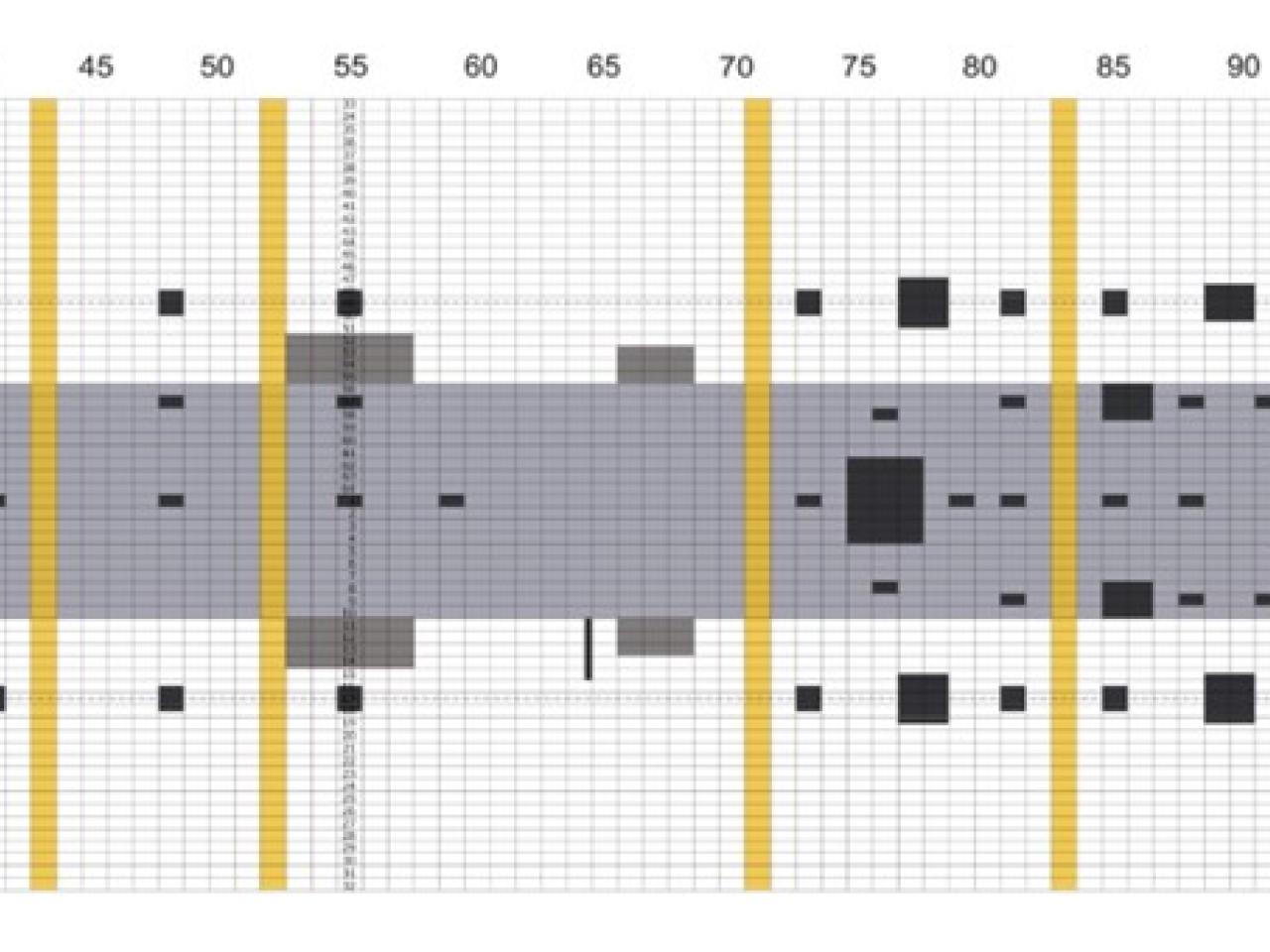
Based on the combination of all these measurements, HADES is mapped in detail. The periodic measurements provide the input necessary to possibly adapt or update this mapping in function of time, due to the pressures at a depth of 225 meter. Here you see the 2D map of the Test drift, on which the boreholes and instrumented rings are indictated.
Our collaborations
We collaborate with other organisations in various projects to analyse the stability of the galleries in HADES, in developing methods that can be used to monitor the stability of a future repository.
- ANDRA: collaboration to develop monitoring tools
- Laborelec: characterisation of cracks