
Constructing HADES
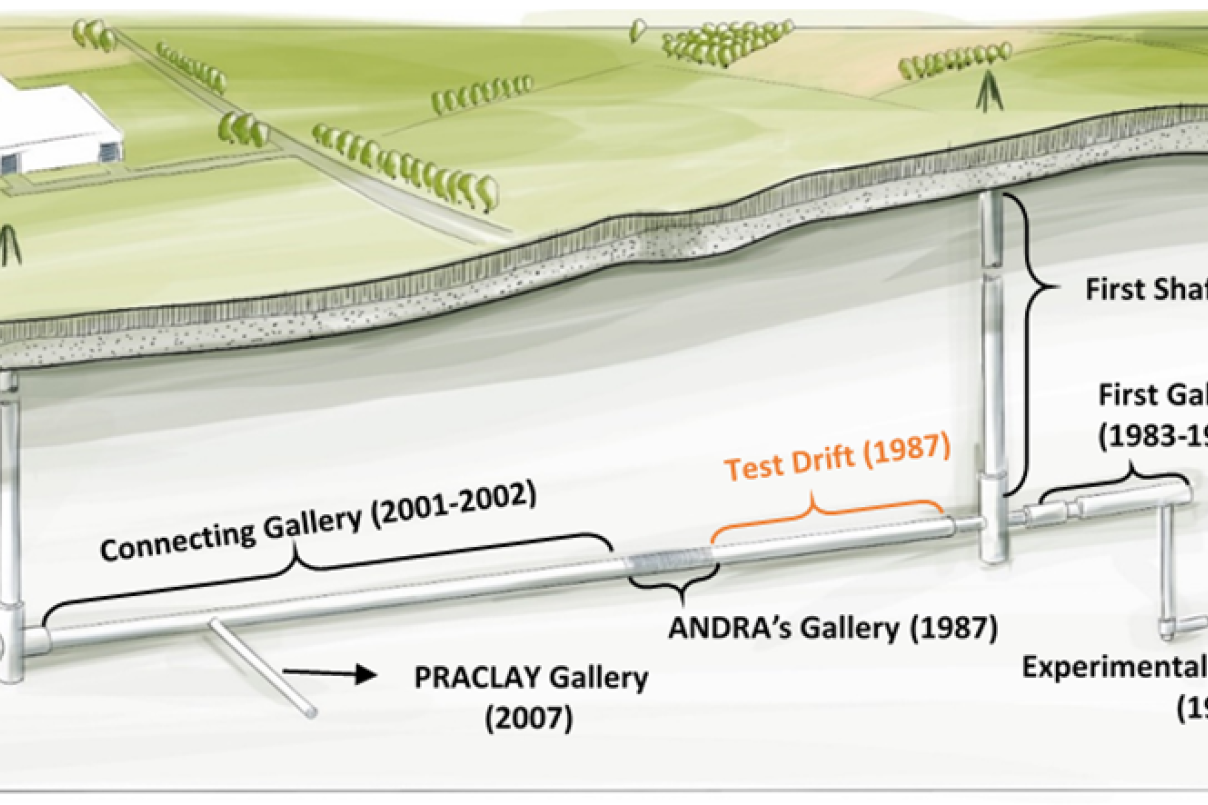
Can we build a repository in poorly indurated clay at a depth of several hundreds of meters? This question was what the pioneers of HADES set out to answer in 1980. HADES was constructed in different phases over the course of 27 years. Discover the different techniques that were used over the years and how this is crucial input for the concept of a final geological disposal repository.
The excavation of HADES was done in two phases. This video gives a general overview of how this was tackled.
-
1980 - 1987: pioneering phase
In the eighties, HADES was first excavated with truly pioneering techniques. By the late 80s, HADES was a 71 meter long gallery, with a 40 meter deep experimental gallery and shaft, which was accessible via one access shaft.
DDiissccoovveerr hhooww HHAADDEESS wwaass ffiirrsstt eexxccaavvaatteedd
-
1997 - 2007: industrial phase
By the late nineties, the knowhow had matured enough to apply industrial techniques for the second phase of the HADES construction. A second shaft was excavated, and HADES was doubled in length. In 2007, a 45 meter long perpendicular gallery was excavated, the to this point latest addition to the underground laboratory.
RReeaadd mmoorree aabboouutt mmooddeerrnn ttuunneelllliinngg tteecchhnniiqquueess
Maintenance of HADES
After construction, HADES also has to be maintained for many decades. To do this, it is important to renovate outdated installations, which is exactly what was done to the hoisting installation of shaft 1.